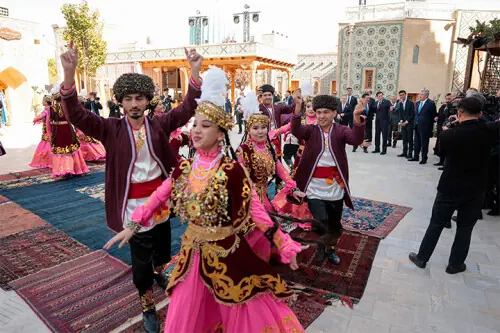
ISLAMABAD: Besides music and delicacies from across the country and several other features for families and children at the ongoing Lok Mela, the exhibition of artisans-at-work has been a major attraction for visitors.
Over 500 craftspeople are actively participating and demonstrating their works in cultural pavilions, showing their creativity in arts, crafts and innovation and mesmerising visitors with their unique artisanship.
The crafts on display include embroidery such as Multani, Bahawalpuri, Hazara, Swati, Balochi and Sindhi embroidery, block printing, lacquer work, khussa making, pottery, tie and dye, doll making, khaddar weaving, truck art, wood carving, wood work, papiermache, namda and gabba, metal work, shawl weaving, zari work, motikari, traditional carpets, blue pottery, ajrak, wax printing, stone work, wooden spoon making, pattu weaving and several others.
Hajira Bibi from Bahawalpur, an accomplished artisan in basketry, made colourful baskets. The most prominent one was Kaneez Fatima and Shakar Bibi from Balochistan.
They practiced Balochi embroidery and had carried on this centuries-old tradition from their mothers and devoted 30 to 35 years of their lives to this profession. They stood out not only for their excellence but also in their tireless propagation of this art by imparting it to future generations.
Male artisans were also equally good in showing their artwork. Mohammad Waseem, lacquer worker from Khyber Pakhtunkhwa showcased his skills, which had been passed down from his father who was also an accomplished master craftsman of lacquer art and recipient of the pride of performance award in recognition of his talent.
Ameer Bukhsh was an expert in natural dyes from Kahror Pucca. The ancient art of wooden block-making had its centres in the lower Indus valley encompassing southern Punjab and all of Sindh. He had not only trained his family members but also imparted training to many artisans in other crafts of textile.
Organisers maintained that the crafts represented valuable material, which formed a tangible part of Pakistan’s historical and contemporary culture. Unlike the West, most traditional crafts in Pakistan were not a profession or a hobby, but an essential component of the diverse cultural patterns, a product of the ethnic and communal attitudes and practices.
However, organisers of the Lok Mela argued there was a recent trend towards the use of crafts as art objects in urban homes.
Published in Dawn, November 30th, 2022