WASHINGTON: Pakistan has once again demanded “complete implementation” of the Indus Water Treaty as the World Bank has appointed an arbitrator and a neutral observer to ensure the treaty’s enforcement.
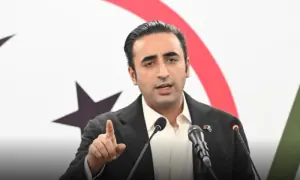
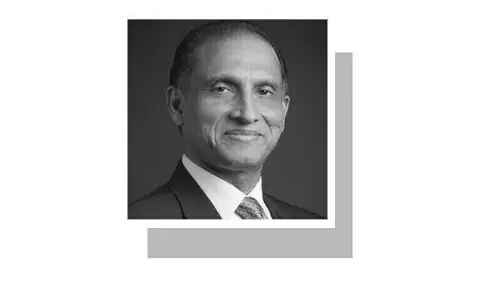
“Implementation of the Indus Water Treaty of 1960, in letter and spirit and in a mutually cooperative way, is crucial,” Pakistan’s Ambassador to the UN, Munir Akram told Dawn on Friday.
Ambassador Akram had also raised the issue in the United Nations earlier this week, reminding the international community that Pakistan has one of the largest irrigation systems in the world and “most of its freshwater resources are transboundary and therefore needed to be managed in a cooperative manner”.
Ambassador Akram told Dawn that earlier this year, Pakistan launched the “Living Indus” initiative with 25 components, covering sustainable development, zero carbon projects, restoring biodiversity, coastal zone management, expanding geographical outreach, and scaling up ecosystem-based approaches.
He described the initiative as a “comprehensive approach to preserve and revive the critical lifeblood of Pakistan’s people and economy”.
“The unpredictable flow of waters in our eastern rivers, as well as climate-induced disasters, have made it extremely difficult for Pakistan to achieve the water-related development goals,” he said while stressing that the 1960 treaty “must be fully implemented.”
WB makes new appointments
The appeal came a week after the World Bank announced the appointment of two experts to review the implementation of the treaty.
Michel Lino has been appointed as the Neutral Expert and Prof Sean Murphy as Chairman of the Court of Arbitration.
“They will carry out their duties in their individual capacity as subject matter experts and independently of any other appointments they may currently hold,” the World Bank had said.
The bank, which supervises the implementation of the treaty, said it was mandated to make the appointments for the two separate processes requested by India and Pakistan in relation to the Kishanganga and Ratle hydroelectric power plants.
While Pakistan called the differences over the two projects “dispute,” India has defined it as a disagreement and objected to the two appointments.
”Carrying out two processes concurrently poses practical and legal challenges”, an Indian official told journalists in New Delhi earlier this week.
He added that the country will assess the matter.
Meanwhile, Pakistan has not yet responded to the two appointments, although it has reservations about the appointment of a neutral expert.
The World Bank, however, said that it “continues to share the concerns of the parties that carrying out the two processes concurrently poses practical and legal challenges”.
But the bank assured “the highly qualified experts appointed as Neutral Expert and as members of the Court of Arbitration will engage in fair and careful consideration of their jurisdictional mandate, as they are empowered to do by the Treaty.”
When Dawn contacted a World Bank spokesperson for comments, she sent a link to the treaty’s definition of a neutral expert and the court of arbitration.
The link explained the bank can appoint a court of arbitration if it concludes that “the dispute is not likely to be resolved by negotiation or mediation.” A neutral expert, however, can be appointed to resolve differences.
Published in Dawn, October 29th, 2022