Lives of older people at risk in flood-hit areas: survey

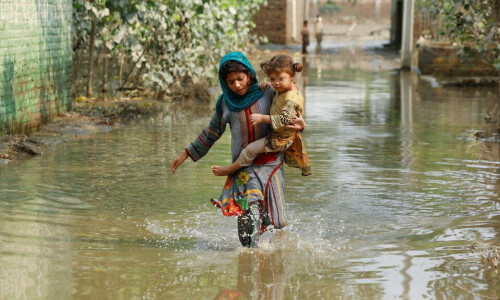
ISLAMABAD: A new survey on the impact of floods on older people in Pakistan reveals that hundreds of lives are needlessly being put at risk due to decimation of health services and the rise of diseases like malaria and diarrhoea, which can be killers for older people with weaker immune systems.
The survey from HelpAge International highlighted that 87 per cent of older people in flood-affected areas of Pakistan have a health condition, but only 51pc have access to health care, while the government and UN assessment reports are largely ignoring their needs and rights.
“So many older people with serious health conditions lost their medication in the floods. The health centres were either swept away or destroyed, along with the contents. And many older people cannot reach the health centres that are functioning and even if they can, they cannot afford to buy the medication they need. Tragically, hundreds of older people will die because of this,” said HelpAge Pakistan country director Syed Mooez.
Of the older people interviewed who have access to health services, more than half said they were too expensive and over a third said that they do not have sufficient medical supplies. Only basic health care centres or private clinics are available to most people, and these fail to meet the needs of those most at risk.
Only 51pc of the elderly have access to health care
Already at risk of chronic diseases and with aging immune systems, older people in the country are finding it harder to fight against water-borne diseases, such as malaria. These are increasing as a result of the now stagnant water and mosquitoes, especially in Sindh.
A large number of the edlerly were actively working before the floods, but now only 24pc of those surveyed have an income. A worrying 61pc of those who have been displaced have had to borrow money to get by. The survey shows that the highest safety concern mentioned by older men and women is financial abuse (38pc) such as family members stealing from them.
Outside the public sector workforce, only 2.3pc of older people in Pakistan receive a pension, so if they are not able to work, they are entirely dependent on aid or their families to survive.
Older people play a vital role in families in Pakistan. This becomes even more important in times of emergency when family members are displaced or migrate for work. But older people who are barely able to meet their own basic needs, are also caring for children, with 78pc of those interviewed caring for three or more children. Unsurprisingly, many older people are experiencing severe anxiety.
Published in Dawn, October 25th, 2022