8
8

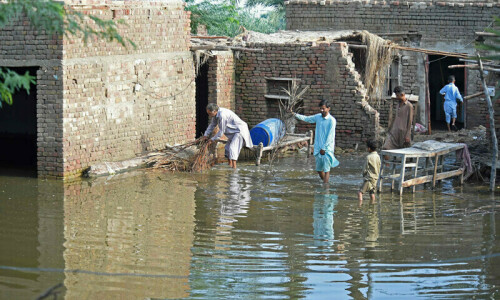
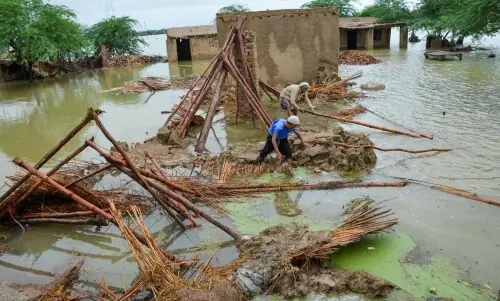
ISLAMABAD: The flood-affected people in Punjab and Khyber Pakhtunkhwa are returning to their places of origin or at least close to it to assess livelihood’s condition, the UN Office for the Coordination of Humanitarian Affairs (UNOCHA) has said.
In its latest situation report, the UNOCHA said that during the last week, receding waters were observed, particularly in Sindh and Balochistan.
“In Sindh, water is receding in the districts of Kashmore, Kandhkot, Larkana, Ghotki, Sukkur, Tando Allayar, Shaheed Benazirabad, Tando Mohammad Khan, Umerkot and Sanghar,” the report added.
Based on the observations by the UN Satellite Centre, the floodwater has decreased by around 300sq km in Balochistan, 900sq km in Punjab and 4,000sq km in Sindh.
As the winter approaches, the population will be severely affected by the harsh weather conditions in a few weeks, requiring adequate shelter and non-food items such as tents and blankets.
However, the mounting challenges in the form of outbreak of diseases still persist in the flood-hit areas.
The outbreaks of waterborne and vector-borne diseases continue to increase in Sindh and Balochistan, particularly due to the destruction of health facilities and standing water.
The government-led multi-sector rapid needs assessments (RNA) conducted in the worst-affected districts of Sindh indicated that 37 per cent of the key informants reported their nearest health facility to be dysfunctional or functioning with limited capacity.
Reports of low stocks of essential medicines and medical supplies and access limitations pose another challenge in providing adequate health services to people in need.
The report estimated that around 650,000 pregnant women in the affected areas were facing challenges to access maternal services, while nearly four million children lack access to health services.
The health situation was also exacerbated by lack of adequate sanitation and drinking water facilities.
As large parts of Sindh remain flooded, an estimated 5.5m people no longer have access to safe drinking water due to damages to water supply infrastructure and sanitation facilities, the OCHA said.
Children were the most at risk of suffering the consequences of deteriorating health and sanitary conditions.
As of Oct 7, almost 10m children were in need of immediate life-saving support, including 4m those who lack access to health services and 7.6m exposed to protection risks.
Food security aggravated
According to the report, floods have also aggravated food insecurity and malnutrition. An estimated 14.6m people require emergency food assistance from December through March 2023, an increase of over 100pc of the pre-flood estimate.
This number included 4m people in Integrated Food Security Phase Classification (IPC) Phase 4 (emergency).
The report also identified rising inflation and significant damage to irrigation systems, as factors that could further deteriorate food security.
The findings also indicated a significant loss to livestock, crops and orchards. Around 31pc of livestock holders have lost at least one animal/poultry, with the highest proportion in Sindh (44pc) followed by Punjab (35pc) and KP (25pc).
The floods also damaged an additional 7pc of crops and vegetables and around 30pc orchards.
Published in Dawn, October 17th, 2022