Members of the European Parliament’s Subcommittee on Human Rights (DROI) on Friday urged Pakistan to undertake timely reforms and legislative changes on human rights issues including the “misuse of blasphemy laws”.
“They called for determined and structured action, including the swift adoption of laws against torture and enforced disappearances, steps to substantially reduce the number of crimes carrying the death penalty and to apply the new procedures for mercy petitions,” a press release issued by the EU mission in Islamabad said.
A delegation of the DROI visited Pakistan from September 19 to September 21 to overview the human rights situation in the country, the press release added.
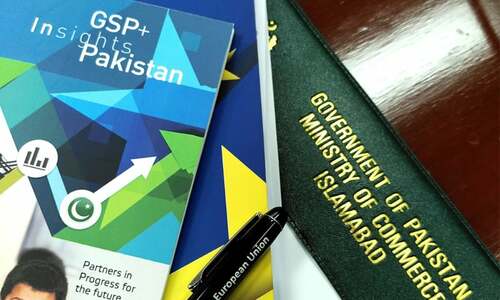
The trip took place in the backdrop of the final round of the European Union’s (EU) monitoring of Pakistan’s preferential trade access to the EU market under the “GSP+” scheme for 2014-2033 and its preparations for an application to the next GSP system to be determined in 2024.
Pakistan was granted GSP+ status in 2013, granting Pakistani products duty-free access to the European market. The GSP+ is an entrenched trade and development policy instrument, in place since 1971. Under this status — set to expire on Dec 31, 2023 — there is zero per cent duty on several products.
The EU is Pakistan’s most important export market and as a major “GSP+” country, it has committed to ratifying and complying with 27 international conventions on human rights, labour rights, sustainable development and good governance.
The EU statement issued today said that its members discussed a wide range of human rights topics during their meetings with the speaker and members of the National Assembly, as well as with the chairman and members of the Senate.
“They also held meetings with the Minister of Human Rights, the Minister of Law and Justice, and the Chairwoman of the National Commission on Human Rights.
The delegation met with civil society organisations, women human rights activists and media. In these discussions, they talked about the criminal justice system, torture and the death penalty, economic and social rights, prevention of domestic violence, and the freedoms of religion and belief and the freedom of expression both online and offline,“ it stated.
During the meeting, the members called for adoption of laws protecting journalists, eliminating obstacles to the work of civil society organisations and media, and the rights to collective bargaining and unionisation should be implemented.
The delegation also highlighted the need to prevent the misuse of blasphemy laws, by applying safeguards against false accusations.
“The members and Pakistani senators committed to sending a joint letter to Pakistan’s Supreme Court judges, requesting the court system, particularly at lower levels, speed up its processing of blasphemy cases,” the press release said.
The EU members also called for decisive actions to prevent domestic violence, child labour and child marriage, it added.
The chairperson of the delegation, Maria Arena, said that the visit allowed the committee to get an overall picture of the challenges faced by Pakistan when it came to human rights.
“Significant progress and renewed commitment to genuinely change the situation on the ground are essential for Pakistan to succeed in its application process for post-2023 GSP +,” she highlighted.
The European Parliament, Arena added, was working hard to adapt the scheme’s human rights requirements and how beneficiary countries and the EU cooperate.
Alongside the meetings, the delegation also visited an Afghan refugee community in the Kheshgi area of the Nowshera district, which was affected by the flooding, and talked to residents about their livelihood and challenges.
Furthermore, the members expressed their condolences for flood victims and their families, assuring their solidarity was with the people of Pakistan.
They underlined that the international community must increase its efforts to reduce global carbon emissions and help the countries suffering the most from climate change.