6
6

BEIJING: China’s President Xi Jinping on Tuesday vowed to “defend common security” with Kazakhstan, state media reported, as he prepares to travel to Central Asia this week.
Xi’s state visits to Kazakhstan and Uzbekistan from Wednesday to Friday will be his first trip abroad since the early days of the coronavirus pandemic. He will attend a leaders’ summit of the Shanghai Cooperation Organisation (SCO) in the Uzbek city of Samarkand, a stop on the ancient Silk Road.
“China is willing to work with Kazakhstan to deepen cooperation in law enforcement, security and defence,” Xi wrote in an article for Kazakh media that was republished by Chinese state broadcaster CCTV.
He said Beijing also wanted to work with Kazakhstan to combat drug trafficking and transnational organised crime as well as what China calls the “three evils”. China’s government has previously used the term “three evils” — defined as terrorism, separatism and religious extremism — to refer to its crackdown in its far western region of Xinjiang, which borders Kazakhstan.
The SCO is made up of China, Russia, India, Pakistan and four Central Asian countries — Kazakhstan, Kyrgyzstan, Uzbekistan and Tajikistan.
In a separate article for Uzbek media, Xi pledged to “strengthen security cooperation and resolve risks and challenges” and said Uzbekistan had a “unique role to play in resolving the Afghanistan issue”, CCTV reported.
“The two sides must take a clear stand against any forces undermining the regional security situation,” CCTV reported Xi as writing.
Xi is set to meet Putin during a regional summit in Uzbekistan, in a public show of unity that flies in the face of United States-led campaign to isolate Russia over its war in Ukraine.
While Beijing has not explicitly endorsed Moscow’s invasion of Ukraine, it has steadily built economic and strategic ties with Russia.
Analysts say that as China-US relations plummet, Beijing believes it needs to nurture the bond with its giant northern neighbour. China sees Russia as an important partner in muscling international institutions away from Washington’s sphere of dominance.
And in terms of trade, China has ramped up its purchases of oil from Russia in recent months, with Russia becoming China’s top oil provider for three months in a row from May to July, helping to offset Moscow’s losses.
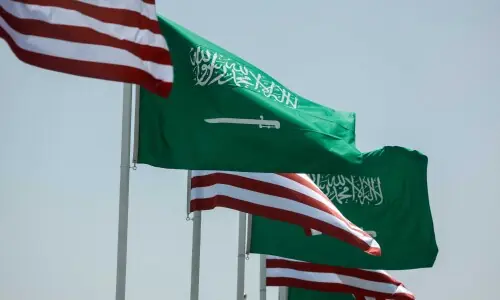
China-US relations have been fraught for years, with a trade war showing no signs of easing while Washington accuses Beijing of human rights abuses.
In August, ties hit a dramatic new low when US House Speaker Nancy Pelosi visited self-ruled Taiwan, enraging Beijing which views the island as part of its territory.
The Chinese government responded with massive military drills and missile launches around Taiwan, and cancelled cooperation with the US in multiple areas including key climate talks.
Published in Dawn, September 14th, 2022