UN warns famine ‘at the door’ in Somalia

NAIROBI: The United Nations warned on Monday that Somalia was on the brink of famine for the second time in just over a decade, and that time was running out to save lives in the drought-stricken country.
“Famine is at the door and we are receiving a final warning,” visiting UN humanitarian chief Martin Griffiths told a press conference in the Somali capital Mogadishu.
“The unprecedented failure of four consecutive rainy seasons, decades of conflict, mass displacement, severe economic issues are pushing many people to... the brink of famine.” Millions of people are at risk of starvation across the Horn of Africa which is in the grip of the worst drought in four decades after four failed rainy seasons wiped out livestock and crops.
There are “concrete indications” that famine will strike Baidoa and Burhakaba in the Bay region of south-central Somalia between October and December, said Griffiths, the head of the UN Office for the Coordination of Humanitarian Affairs (OCHA).
“I’ve been shocked to my core these past few days by the level of pain and suffering we see so many Somalis enduring,” he added. “We are in the last moment of the 11th hour to save lives.”
Humanitarian agencies have been ringing alarm bells for months and say the situation across the Horn of Africa — including Kenya and Ethiopia — is likely to deteriorate with a likely fifth failed rainy season in the offing.
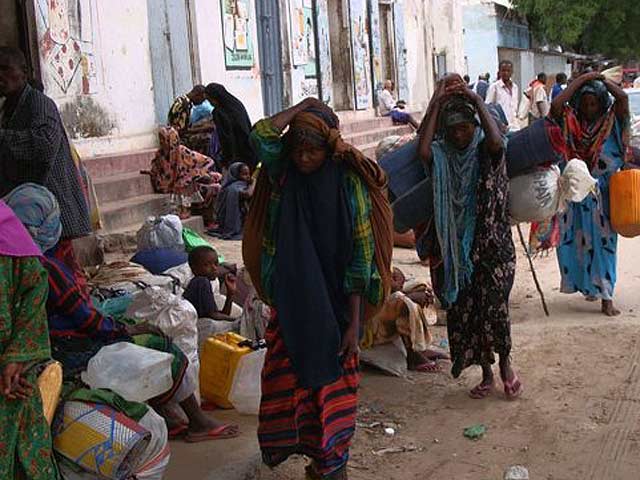
In Somalia alone, about 7.8 million people or half the population face crisis hunger levels, including about 213,000 in danger of famine, UN agencies say. Around one million have fled their homes on a desperate quest for food and water.
‘World must act now’
Griffiths said the situation was worse than during Somalia’s last famine in 2011 when 260,000 people died, more than half of them children under the age of six.
He described scenes of heart-rending suffering during a visit to Baidoa, describing it as the epicentre of the crisis where he saw “children so malnourished they could barely speak” or cry. Around 1.5 million children across the largely pastoral country were at risk of acute malnutrition by October if nothing changed, he warned.
Published in Dawn, September 6th, 2022