Clashes in Basra kill four as crisis flares in Iraq’s south


 2
2


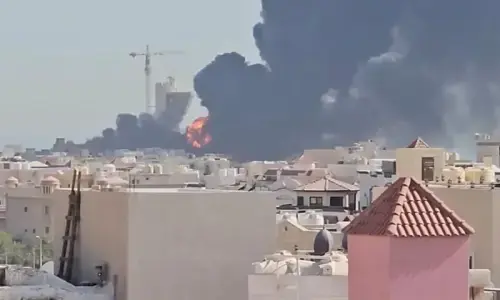
BAGHDAD: Clashes among rival Shia militants in the Iraqi city of Basra have killed at least four people, security officials said on Thursday, as violence from a worsening political crisis hit the south of the country.
The unrest began with two days of intense street fighting in Baghdad earlier in the week, the worst the Iraqi capital has seen for years.
The crisis amounts to a power struggle between the powerful cleric Moqtada al-Sadr and mostly Iran-aligned parties and paramilitary groups.
Both sides have tried to exert their control over formation of a new government since an election in October. The struggle began with political moves in parliament and the judiciary, went to the streets as Sadr withdrew from the political process and staged protests during the summer, and then degenerated into violence at the end of August.
It has left Iraq, which is reeling from years of war, sanctions, civil strife and corruption, without a government for the longest period since the 2003 US invasion which toppled dictator Saddam Hussein.
The violence has centred on Baghdad and the south, areas dominated by Iraq’s Shia majority which has ruled the country since Saddam’s regime was swept away.
“The security situation in Basra is really bad, and could escalate,” one of the security officials said.
Both security officials in Basra, Iraq’s main oil-producing hub, said the deadliest clashes took place overnight in the centre of the city. Two of those killed were members of Sadr’s Peace Brigades militia, they said.
On Thursday morning, gunmen attacked government buildings in Basra where security forces and paramilitary groups with links to Iran are stationed. The officials could not immediately identify the gunmen firing on the government buildings, but said they believed they were Sadr supporters.
The leader of one Iran-backed militia group and one of Sadr’s main rivals, Qais al-Khazali, said in a statement that he was ordering all offices of his group closed and urging supporters not to retaliate if they were attacked.
Armed supporters of Sadr have attacked offices belonging to Iran-aligned groups in recent days, security officials say. In the southern city of Nassiriya, his followers raided a local headquarters for paramilitaries with ties to Iran and seized cars and weapons, according to Sadrist and Iran-aligned security officials in the city.
In Baghdad on Monday and Tuesday, armed supporters of Sadr fought with security forces and Iran-aligned gunmen in clashes that broke out hours after Sadr announced his full withdrawal from political life.
After Sadr’s announcement his followers, who had until then been staging a peaceful sit-in at the parliament, began storming other government buildings and were shot at. His militiamen retaliated and the clashes began.
Published in Dawn, September 2nd, 2022