PM Shehbaz announces fuel charge adjustment exemption for 17m power consumers

Prime Minister Shehbaz Sharif on Tuesday announced that 17 million of the total power consumers will be exempted from paying the high fuel charges adjustment (FCA) in their electricity bills.
In a video address from Qatar, where he is on a two-day trip, the prime minister explained the mechanics behind why FCA was levied and said it had seen a "considerable increase" for July and August's power bills, because of high international oil prices, which was "intolerable" for the common man.
He said that after consulting with the International Monetary Fund, PML-N supremo Nawaz Sharif and other coalition leaders, it was decided that 17.1m electricity consumers would not have to pay the FCA.
He added that the government was also reviewing the situation for the rest of the 13m power consumers who, PM Shehbaz said, were in a better financial position.
Shehbaz said Power Minister Khurram Dastgir would hold a detailed press conference on the matter on Wednesday as he detailed the mechanism behind the announcement and how it would practically work.
The prime minister added that the FCA exemption would also apply to tube well users, which he said numbered around 300,000.
"I hope from these measures there will be contentment among the people and they would realise that the government is trying to improve their situation."
Later, the PML-N tweeted that the relaxation would apply to those whose consumption in terms of units of electricity was low.
Interior Minister Rana Sanaullah said the move would "alleviate the miseries of more than 17m inflation-stricken consumers" and was part of "necessary measures to curb inflation".
The prime minister had taken strict notice a day ago of public complaints about inflated electricity bills and directed authorities concerned to submit an urgent report on the matter.
“Khadim-i-Pakistan is answerable to his people for resolution of their grievances. I am committed to telling the truth to my people,” PM Shebaz was quoted as telling participants of the meeting.
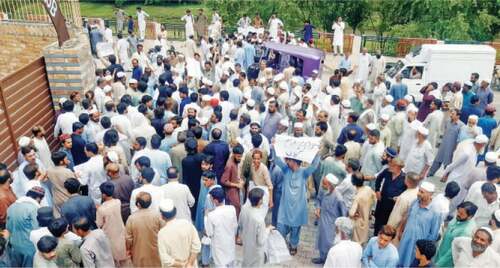
Shehbaz took notice after people in several parts of the country started taking to the streets to protest against the federal government’s approval of the massive increase in power charges which led to inflated power bills for both domestic and industrial power consumers.
Last month, the National Electric Power Regulatory Authority allowed distribution companies to charge an additional Rs155 billion to compensate for the higher fuel generation cost in June.
The authority allowed an unprecedented FCA of Rs11.37 to K-Electric and Rs9.89 per unit to electricity distribution companies previously owned by Wapda, or Discos.
The government had also announced an increase of Rs7.91 per unit in the average base tariff across the country in three phases starting with effect from July. It had approved a Rs1.55 per unit increase in the base tariff across the country under a quarterly adjustment.