Cameras to remain turned off until revival of N-deal, Iran tells IAEA


 7
7


DUBAI: Iran will keep the UN nuclear watchdog’s cameras turned off until a 2015 nuclear deal is restored, the head of the country’s Atomic Energy Organisation said on Monday, the semi-official Tasnim news agency reported.
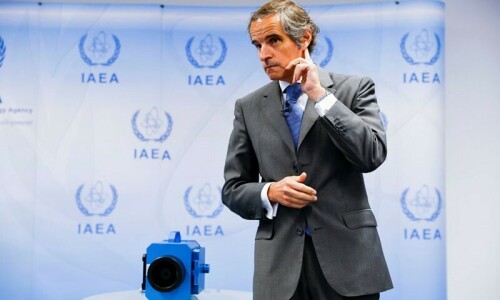
Iran informed the International Atomic Energy Agency (IAEA) it had removed IAEA equipment, including 27 cameras installed under the 2015 pact with world powers, after the agency passed a resolution criticising Tehran in June.
“We will not turn on the IAEA cameras until the other side returns to the nuclear deal,” Iranian nuclear chief Mohammad Eslami said.
The 2015 nuclear pact imposed curbs on Iran’s nuclear activities in return for the lifting of international sanctions. Then-president Donald Trump pulled the United States out of the deal in 2018, reimposing tough economic sanctions on Tehran.
Iran’s ruling clerics responded by breaching the pact’s nuclear restrictions.
Iran’s foreign ministry spokesman Nasser Kanaani on Monday accused IAEA Chief Rafael Grossi of having “unprofessional, unfair and unconstructive views” on Tehran’s nuclear programme.
He also added that Tehran hopes a return to the nuclear deal can be reached soon should the United States show goodwill.
“Iran is committed to talks and will continue until a good and sustainable deal is reached,” Kanaani said at his weekly news conference.
Iran’s nuclear programme is “galloping ahead” and the IAEA has very limited visibility on what is happening, Grossi told Spain’s El Pais newspaper in an interview published on Friday.
Western powers warn Iran is getting closer to being able to sprint towards making a nuclear bomb. Iran denies wanting to. Indirect talks between Iran and the United States on reviving the 2015 deal have been stalled since March.
French President Emmanuel Macron expressed his disappointment to his Iranian counterpart Ebrahim Raisi at the lack of progress over talks, the Elysee Palace said on Saturday.
The nuclear pact seemed near revival in March but talks were thrown into disarray partly over whether the United States might remove Iran’s Islamic Revolutionary Guard Corps (IRGC) from its Foreign Terrorist Organisation list.
The IRGC controls elite armed and intelligence forces that Washington accuses of a global terrorist campaign.
The Biden administration has made clear it has no plan to drop the IRGC from the list, a step that would have limited practical effect but which would anger many US lawmakers.
Published in Dawn, July 26th, 2022