Poor in India can dream, says its first tribal president


 94
94


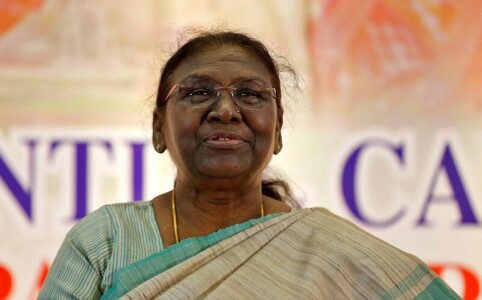
India’s first president from a marginalised tribal community, Droupadi Murmu, said on Monday after being sworn in that her election was an “achievement of every poor person in the country”.
Murmu’s elevation to India’s highest constitutional post has been seen as an important gesture of goodwill by Prime Minister Narendra Modi to the communities that make up more than eight per cent of its 1.4 billion people ahead of a general election due by 2024.
Murmu, a former teacher and state minister from Modi’s Bharatiya Janata Party (BJP), is the second woman to hold the largely ceremonial role of president. She was born into a poor family of the Santhal tribe from the eastern state of Odisha.
Members of parliament and of state legislatures elected Murmu last week for a five-year term after she was nominated by the BJP.
“My election is proof of the fact that the poor in India can have dreams and fulfil them too,” Murmu, 64, said in a speech in parliament after taking the oath of office.
“It is a matter of great satisfaction for me that those who have been deprived for centuries and those who have been denied the benefits of development, those poor, downtrodden, backwards and tribals are seeing their reflection in me.”
Modi hailed Murmu’s swearing-in as a “watershed moment for India, especially for the poor, marginalised and downtrodden”.
India’s president acts as the supreme commander of the armed forces but the prime minister holds executive powers.
The president can play an important role during political crises, such as when a general election is inconclusive, by deciding which party is in the best position to form a government.