0
0

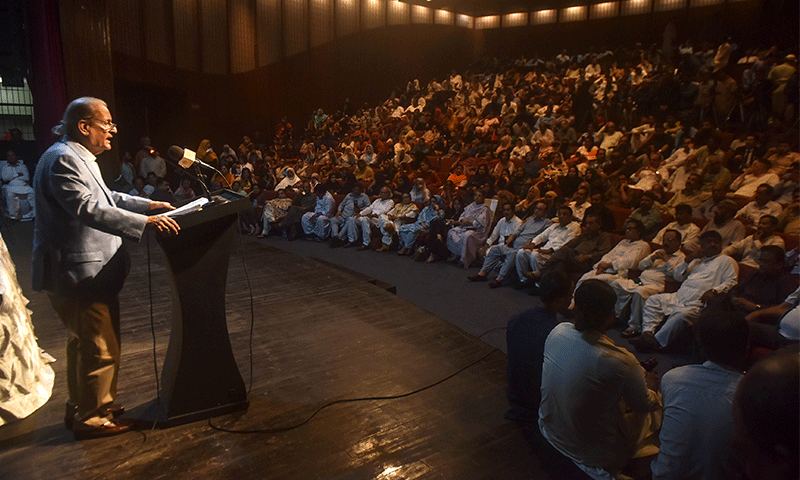
KARACHI, Dec 14: The Unicef has embarked upon an extensive training programme for midwives to help strengthen and sustain the Women and Child Health Care Programme in the rural and remote areas. Addressing a four-day midwifery/ tutor workshop organized in coordination with the Unicef at Sobhraj Maternity Hospital, Unicef Sindh Programme Officer Dr Asif Aslam said that high incidence of maternal and infant mortality as well as morbidity could only be addressed through easy public accessibility to well-trained professionals.
Since Unicef was fully committed to the cause of quality health care and steady social progress hence it was in constant contact with the health departments and concerned professional bodies to improve life expectancy as well as health status of infants, children and women, he elaborated.
Dr Asif Aslam mentioned that non-availability of doctors and qualified medical professionals in remote areas had emerged as a major cause of deaths as well as severe physical disabilities among women and newborns.
The Unicef was thus concentrating on proper training of midwives in remote areas ultimately helping newborns to have good survival chances and quality existence supplemented by the presence of their healthy and living mothers, he added.
He also referred to different health care and social developments programmes supported by his agency, besides the help and care being extended to the victims in earthquake-hit areas.
PMA secretary general Dr Shershah Syed, observed that the government must develop health sector on strong lines with constant provision for education and training of medical professionals.
Dr Shershah mentioned that of the 65,000 villages across the country only 13,000 registered midwives could be seen working. In areas, where qualified gynaecologists might not be available presence of trained midwife could be the only ray of hope for mothers and their newborns, he added.
He also appealed to EDO Health to activate 40 maternity clinics in the city registered almost non-functioning adding that only six district government managed maternity hospitals in the metropolis are fully functional.
The session was also addressed by Dr Fouzia Rehman and Dr Shabih Naz. —APP