Norway inaugurates Utoya massacre memorial


 0
0

OSLO: Norway on Saturday inaugurated a memorial to the victims of neo-Nazi Anders Behring Breivik’s 2011 massacre, made up of 77 bronze columns representing each of the dead.
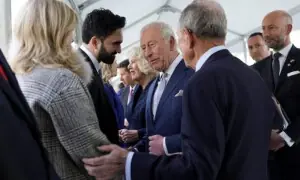
The ceremony, held almost 11 years after the country’s deadliest peacetime attack, was attended by survivors, families and loved ones of the victims, Prime Minister Jonas Gahr Store and Crown Prince Haakon, among others.
“We as a nation need a place of remembrance. A place that will forever remind us of all those we have lost. A place where our children and grandchildren can learn about what happened, about the consequences of right-wing extremism and hatred,” Prime Minister Jonas Gahr Store said.
On July 22, 2011, Breivik set off a truck bomb near the government offices in Oslo, killing eight people, before heading to the island of Utoya.
There, disguised as a police officer, he shot dead 69 others, mostly teens, attending a Labour Party youth-wing summer camp.
He said he killed his victims because they embraced multiculturalism.
The memorial, located by the dock where people take the ferry to Utoya island, consists of a curved staircase by the water’s edge.
Controversial memorial
At the base of the steps are 77 narrow bronze columns, with the first curved arc aimed at the sun as it stood in the sky when the bomb exploded in Oslo.
The second arc is aimed at the sun as it stood in the sky during the attack on Utoya.
The memorial has been mired in controversy.
After an initial plan to build a different monument in another location failed, the authorities decided to erect the 77 bronze columns at the Utoya dock.
But a number of residents near Utoya legally challenged both the Norwegian state and Labour Party’s youth wing, the organisation to which most of the victims belonged, in a bid to have the memorial moved.
The plaintiffs, including some who had taken part in rescue efforts the day of the massacre and were traumatised, argued that the memorial would prolong their trauma.
A Norwegian court in February 2021 ruled against opponents, saying the benefits of the memorial outweighed the traumas it might revive.
Breivik, now aged 43, was in 2012 sentenced to 21 years in prison, Norway’s then-harshest sentence which can be extended as long as he is considered a threat to society.
He was at the time ordered to serve a minimum of 10 years before he could request parole, which he did in January 2022.
A court in February rejected his request, saying he remained a risk to society.
Published in Dawn,June 19th, 2022