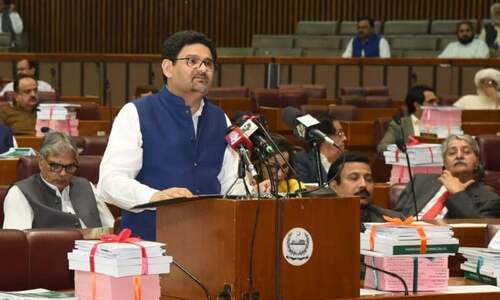
THE annual budget presentation has traditionally been heavy on granular details of the government’s spending plans for the coming fiscal year. It helps the common citizen get a rough idea of what is in it for them.
This year, however, Finance Minister Miftah Ismail went with a speech that was heavy on rhetoric but lacking in substance. Was it to avoid the negative optics of having to formally announce that he plans to reinstate both the petroleum levy and the Gas Infrastructure Development Cess, which will result in another hit to citizens in the form of a third hike in fuel and gas prices?
Mr Ismail may have stayed mum, but citizens can expect more pain from their gas, electricity and fuel bills starting next month.
The budget document, on the other hand, reads as if the government simply ticked off items from a checklist handed to it by the IMF.
Analysis: Appeasing IMF while preserving political capital
Having removed the major chunk of PTI’s fuel subsidy over two instalments ahead of the budget, all that had been left was the reimposition of the sales tax and petroleum levy, on which the government has obliged. Likewise, the Fund had demanded tight control over the primary balance, and the government has dutifully budgeted for a surplus. An attempt has also been made to better tax the real estate market, which had long been in the cross hairs for being a safe haven for grey money and tax evasion.
Given that the government seems to have more or less acceded to all of the IMF’s major demands, it is hoped that the lending agency will now be more forthcoming about the release of the much-needed funds.
However, it is worth asking the government if this budget was designed solely to secure an IMF loan because it otherwise seems to be lacking in intent.
There is nothing in it that suggests that the government is serious about fixing the structural imbalances inherent in the economy — the same imbalances that the finance minister had been complaining loudly about just a day earlier when he was unveiling the Pakistan Economic Survey.
It has budgeted for inflation to clock in at 11pc for the year, which seems highly unrealistic given the massive increases in fuel prices it has just unloaded, which have yet to be fully absorbed. Likewise, the budgeted growth figure seems unrealistic given that economic activity is going to slow considerably as the economy cools down. Little thought also seems to have been given to how the uncertainty roiling global commodity markets may impact the average citizen. If oil prices rise any further, the impact will snowball massively when combined with the reimposed sales tax and petroleum levy. Will the public be able to bear such an increase?
The finance minister should really have been more forthcoming about the government’s plans.
Published in Dawn, June 11th, 2022