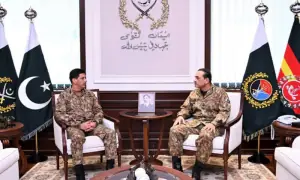
THE government has attracted significant flak for ‘officially’ empowering the ISI, the country’s premier spy agency, to ‘vet and screen’ civil servants before their induction, appointment, posting and promotion. The rationale behind the move is to give legal cover to a practice that was already ‘in place’, but had never been formalised. The change made by Prime Minister Shehbaz Sharif to civil bureaucracy rules, by notifying the spy agency as the Special Vetting Agency, will also give ‘legal effect’ to reports issued by the ISI for use in court as valid documents, although there are some who dispute this explanation. Needless to say, most civil servants are disappointed by this decision. Apparently, this job of vetting aspiring and in-service bureaucrats is beyond the mandate of the spy agency. Moreover, it is not clear under what law the ISI can screen the civil bureaucracy. There are also concerns as to how an intelligence agency operating outside civilian oversight can be tasked with scrutinising civil government officials in matters pertaining to their appointments and promotion, unless they are suspected of being involved in anti-state activities. Such actions enhance the role of a military-controlled agency and give it leverage over civil servants.
The prime minister’s decision has been met with criticism, with the Human Rights Commission of Pakistan saying that the “role of the military in civilian affairs needs to recede if Pakistan is to move forward as a democracy”. Certainly, there is no disagreement on the screening of public office holders per se; their performance is crucial to ensuring that state and government systems run smoothly in the country. Background checks, especially of those whose credentials may be in doubt, are helpful in removing any concerns regarding their personal integrity. However, this is a job that is best left to the civilian intel agencies. The ISI’s job is to safeguard Pakistan from the designs of its enemies, and its focus should not be diverted to issues which can be managed by others.
Published in Dawn, June 6th, 2022