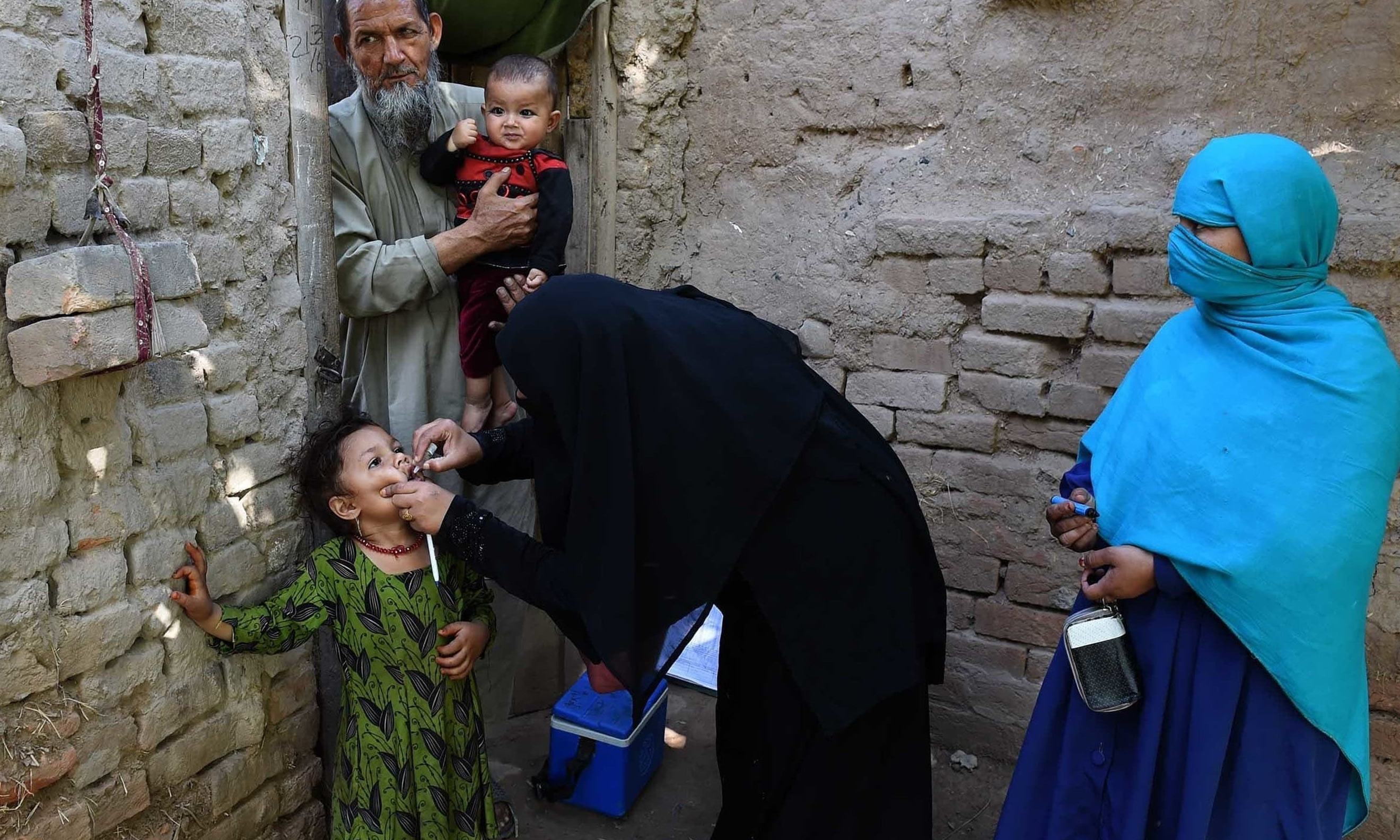
ISLAMABAD: After resurgence of polio cases, Federal Health Secretary Dr Mohammad Fakhre Alam on Saturday directed to do risk assessment across Pakistan on the basis of current epidemiological data.
He was chairing a meeting attended by the Pakistan Polio Programme leadership to discuss the state of polio eradication efforts in the country.
He took charge of his responsibilities as health secretary on Thursday and called a meeting on polio within two days.
The meeting was attended by Director General Health Dr Rana Safdar and National Emergency Operations Centre Coordinator Dr Shahzad Baig.
The health secretary discussed the current strategies and the way forward to overcome the persistent challenges to polio eradication.
“The resurgence of cases is a national emergency and risk assessment will be done again across Pakistan on the basis of current epidemiological data. We must consistently work on ways to strategise better and ensure that every last child receives the life-saving polio vaccine,” said Dr Mohammad Fakhre Alam.
“Eight have so far been reported from Mir Ali and Miranshah of North Waziristan, while all southern districts of Khyber-Pakhtunkhwa remain at high-risk,” Dr Shahzad Baig said in his briefing to the Health Secretary, adding that the programme was vaccinating at all transit points to mitigate the risk of wild poliovirus transmission to other parts of the country.
“Parents and caregivers who refuse vaccination for their children are putting them at risk of lifelong disabilities,” the health secretary emphasised.
“Every child has a right to a safe and healthy life,” he added.
Afghanistan and Pakistan are the only two polio-endemic countries left in the world. Both countries synchronised nationwide immunisation campaigns between May 23 and 27, vaccinating nearly 50 million children under the age of five on both sides of the border.
Polio is a highly infectious disease caused by poliovirus mainly affecting children under the age of five years. It invades the nervous system and can cause paralysis or even death. While there is no cure for polio, vaccination is the most effective way to protect children from this crippling disease.
Each time a child under the age of five is vaccinated, their protection against the virus is increased. Repeated immunisations have protected millions of children from polio, allowing almost all countries in the world to become polio-free.
Published in Dawn, June 5th, 2022