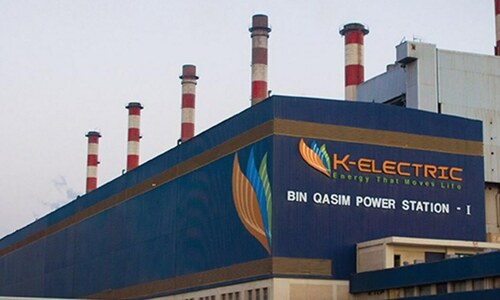
ISLAMABAD: The National Electric Power Regulatory Authority (Nepra) on Friday notified Rs4.83 per unit additional fuel cost adjustment (FCA) to K-Electric to be charged to consumers for electricity they consumed in March.
This will help the Karachi-based private utility to mop up an additional amount of Rs7.86 billion from consumers in upcoming billing month of June. The FCAs shall be applicable to all the consumer categories except lifeline consumers, Nepra said.
The K-Electric had demanded an FCA of Rs5.275 per unit with a revenue impact of Rs8.6bn but the regulator found that it was claiming its energy cost of Rs9.39 per unit for purchase of electricity from the national grid which actually stood at Rs9.1 per unit under approved rates, with a net impact of Rs225 million.
Similarly, the regulator also found Rs6m higher than justified charges on account of fuel costs of two independent power plants of Gul Ahmad and Tapal. The regulator also rejected KE’s claims on account of energy cost during testing for new Port Qasim Plant-III, saying it had already allowed such a compensation was already built in its multi-year tariff, hence another disallowance of Rs497m.
Based on these disallowances, Nepra approved Rs4.83 per unit FCA (Rs7.86bn) instead of Rs5.275 per unit (Rs8.6bn) demanded by the KE. It also recalled that power purchase agreement between National Transmission and Despatch Company (NTDC) and KE was signed on January 26, 2010 for five years for sale/purchase of 650MW on basket rates.
Subsequently, a decision was made by the Council of Common Interests (CCI) on Nov 8, 2012 for withdrawal of 300MW power from NTDC by KE. The CCI decision had since been impugned by way of KE’s suits in Sindh High Court and no new agreement has been signed till date while K-Electric is continuing to draw energy from the national grid, which at present is around 1,100MW, without any contract.
The KE had earlier sought Rs4.89 per unit increase in FCA for March to generate Rs7.95bn from consumers but later revised its demand to Rs5.27 per unit with revenue impact of Rs8.6bn. It said the increase was on account of higher tariff of national grid and RLNG cost for its own power generation. It claimed that the higher than reference fuel cost was mainly because of increase in the prices of furnace oil and LNG by 10 and 40pc, respectively besides a 9pc increase in price of power supply from national grid.
Under the tariff mechanism, changes in fuel cost are passed on to consumers only on monthly basis through automatic mechanism while quarterly tariff adujustments on account of variation in power purchase price, capacity charges, variable operation and maintenance costs, use of system charges and including impact of transmission and distribution losses are built in the base tariff by the federal government.
Published in Dawn, May 28th, 2022