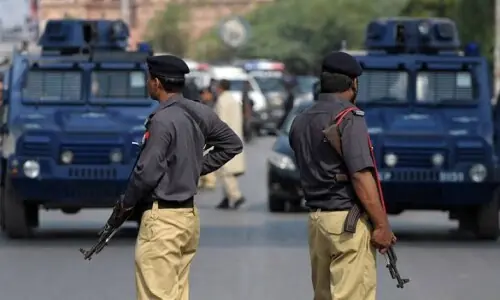
THE frequency of urban terrorism incidents over the past few weeks in Karachi should send alarm bells ringing within the state apparatus and result in an effective strategy to counter such destabilising activities. Monday night’s blast in the city’s Kharadar area — a congested commercial zone — is the third incident of terrorism in three weeks. At least one person has been killed in the tragedy. Last week, a similar blast took place in Saddar in which one person was killed, while on April 26 a suicide bomber struck a van at Karachi University’s Confucius Institute resulting in the deaths of three Chinese individuals and a local driver. The KU attack was claimed by Baloch separatists while the banned Sindhudesh Revolutionary Army took responsibility for the Saddar blast. Law enforcers say there are similarities in the Saddar and Kharadar blasts, as IEDs were used in both incidents. It appears that a police mobile was the primary target of Monday’s incident, while a vehicle of the Pakistan Coast Guard was thought to be the main target in the Saddar attack. Though death and injuries did occur in the Kharadar incident, the toll could have been much higher as the area is packed with traders and pedestrians during business hours in the day.
Clearly, inimical actors are trying to stir up chaos in Karachi through such acts. Whether it is ethnonationalist separatists or religiously inspired militants, the authorities must improve vigilance to prevent further acts of violence targeting the public or law-enforcement personnel. Karachi specifically has been rocked by major bouts of violence of various types over the past few decades and the authorities will need to work extra hard to prevent a resurgence of urban terrorism. Each time such an incident occurs, the administration promises to track down the culprits and bring them to justice. It’s about time they put into action an effective counterterrorism strategy focusing on intelligence-based operations and other pre-emptive steps to prevent incidents of terrorism. Admittedly, policing and securing a city as large and unwieldy as Karachi is difficult, yet to secure the lives and property of the public, urgent action must be taken. The federal and Sindh governments, using the intelligence agencies and police force, are required to stop this new wave of urban violence before it spirals out of control. While the new rulers may be distracted by political turmoil, they cannot afford to be lax when it comes to maintaining law and order.
Published in Dawn, May 18th, 2022