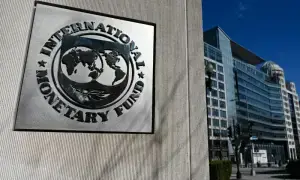
THERE are good chances that the IMF will grant Islamabad’s request to extend its ongoing loan programme for a year to September 2023 and boost its funding by $2bn to $8bn to help ease Pakistan’s balance-of-payments difficulties.
Even though the IMF press release is silent on its response to the request, Finance Minister Miftah Ismail claimed after his meeting with Fund officials that the lender had ‘largely agreed’ to the request. However, the details will be thrashed out during the IMF mission visit here next month.
Once the enhanced loan programme restarts, it should give the Shehbaz Sharif government some much-needed breathing space, besides opening up greater multilateral and bilateral options for financing.
In return, Islamabad has agreed to gradually reverse the fiscally unsustainable energy subsidies announced by the former PTI government to calm popular anger over rising costs, withdraw the controversial amnesty for tax evaders, retain the law giving the State Bank full autonomy, and prepare the upcoming budget in accordance with the programme’s targets — with an emphasis on reducing government spending, especially on development projects.
It is unclear if the government will be allowed to bring in a central bank governor of its choice once the incumbent’s term ends next month. But the minister made clear during his press conference in Washington that no action that could irk the IMF would be taken.
Read: Banking on IMF and friends’ help
Indeed, the new agreement will worsen matters for the low-middle-income class as the reversal of the energy price cap and the return of ‘austere economic policies’ can unleash a new round of inflation and job losses. Hence, we see many cautioning against ‘premature celebrations’ over the agreement.
The fact is that to keep the economy liquid at the moment, the current government, like previous set-ups, has few options other than to agree to the IMF’s tough conditions and call upon the people to pay the price of our ruling classes’ past indiscretions and the extravagant lifestyles of the elite. The question is, whether the coalition is in a position, or even willing, to ask the wealthy to pick up some of the costs. Will the latter be asked to pay their share of taxes, and cut down their consumption of imported luxuries, shopping trips to Dubai and foreign vacations? Or will it be business as usual for them while the rest keep paying their bills?
At his press conference, Mr Ismail ruled out fears of sovereign default. “Pakistan has been facing such situations for the last 75 years and we didn’t default,” he said. What he did not say, or probably had no idea of, is that after every ‘economic bust’, it is the public that is forced to pay a higher price for ‘economic stabilisation’. This cannot go on. It is time for those who have lived off the average Pakistani citizen to pay larger costs to stabilise the economy.
Published in Dawn, April 26th, 2022