World Bank indirectly funding Pakistan coal projects, says analyst


 4
4
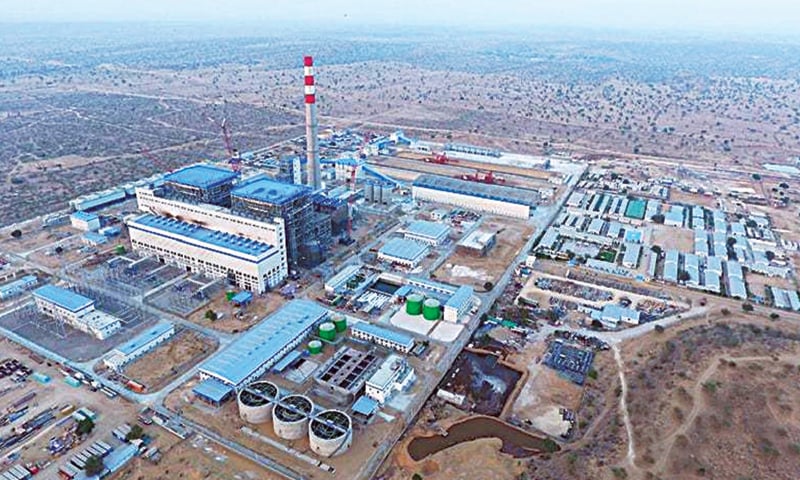

KARACHI: The World Bank has been actively funding coal projects in Pakistan despite making a global no-coal-finance pledge back in 2013, said analysts at a seminar on Tuesday organised by the Alliance for Climate Justice and Clean Energy, a coalition of energy-sector think tanks.
“The World Bank’s assistance led to a surge in coal investments and over 7,000 megawatts of coal-fired power in Pakistan... its rhetoric on coal is different from reality,” said Heike Mainhardt, senior adviser at Urgewald, a Germany-based non-profit organisation.
She said the World Bank may’ve stopped “direct project finance” of coal projects, but it continues to assist Pakistan in following the coal road map without labelling it as such.
As an example of indirect coal funding, she referred to “on-lending through financial intermediaries” that involves the bank making more capital available through commercial banks and equity funds for coal projects.
Other ways of indirect coal funding include direct public finance of enabling infrastructure, on-lending through government budget support, favourable policy reforms like tax breaks and technical assistance in the form of data gathering and feasibility studies.
At least six Thar coal-to-power projects, involving mining and 3,240MW coal-fired power generation, reached financial closure between 2016 and 2020. The World Bank’s post-2013 assistance is linked to each of the six projects, she said.
The World Bank’s International Finance Corporation (IFC) invested $75 million in equity and provided a $150m loan to Habib Bank Ltd in April 2015. The Pakistani lender subsequently either invested equity in or provided debt finance to five Thar coal-to-power projects, she said.
Similarly, the IFC invested $66m in equity in Bank Alfalah Ltd in December 2014, which subsequently provided debt financing to at least two of the Thar projects, she added.
She said the bank’s tariff policy reforms made new coal power investments in Pakistan the most profitable worldwide. “As a result, Pakistan is tied to very high capacity payments for coal power, leading to high subsidies and consumer tariffs,” she said.
Speaking on the occasion, Alternative Law Collective Director Research Zain Moulvi said the World Bank’s tacit support of Thar coal demonstrates the complex mechanisms through which it can instigate crises in Pakistan’s energy sector.
“The Thar coal projects will significantly raise electricity tariffs and have already caused massive displacement and loss of livelihoods in Thar. They’re further projected to cause up to 29,000 air pollution-related deaths,” he said.
Published in Dawn, March 23rd, 2022