Radar a silver lining for Karachi’s storm woes


 3
3


ISLAMABAD: A state-of-the-art weather surveillance radar — formally launched in Karachi on Wednesday — will cover the country’s southern part for a radius of 450 kilometres and help effectively assess the probability of rains around the clock, resulting in an improved weather forecast.
The early-warning weather radar system may have come a little too late, but it is expected to help the authorities better manage disaster-like situations, experienced in the wake of heavy rains over recent years.
The radar in Karachi has been installed with a financial grant of $17.71 million from the Japanese government.
One such radar is already functional in Islamabad, whereas more radars are expected to come online in Multan and Sukkur.
Together, the four radars — costing $74.7 million approved by the Japanese government — will cover more than 80 per cent areas of the country and will be used for short-term weather forecasts, including monitoring thunderstorms and other atmospheric phenomena in the four provinces.
The officials at the Met Office in Karachi believe that the new radar system would boost the country’s ability to more accurately predict the path of severe weather systems before they take a heavy toll.
It would also enhance the department’s ability to make accurate short-term weather forecasts within a range of 450km around the city with close observation of thunderstorms and other unusual weather events from all sides very closely.
An official told Dawn that while the system came online last year, its formal inauguration was delayed due to the Covid-19 pandemic situation
“It became operational in July 2021,” said Sardar Sarfaraz at the Karachi Met office. “During 2021 monsoon, our almost all forecasts met with success and most importantly when back-to-back cyclones developed in the Arabian Sea in October.”
“We kept tracking the cyclone — mainly the one named Shaheen, which posed a serious threat to our coastal areas,” he added.
“Our close monitoring and near-accurate reporting helped the administration to prepare itself accordingly. Unfortunately, in 2020 the city witnessed record monsoon and that too at a time when this radar was not operational.”
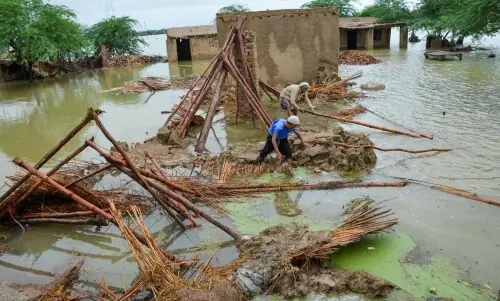
It’s too early to say how this new radar system will help the Karachi administration tackle record torrential rains that lashed the city in August 2020, causing widespread flooding.
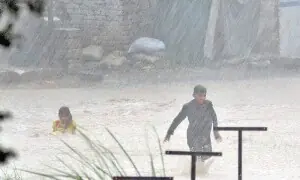
Meteorological officials at the time said the downpours shattered 89-year-old records for the city, leading to scores of deaths and forcing many residents to abandon their homes.
Provincial authorities had to move displaced families into school buildings and the army troops carried out rescue and relief operations.
Japanese support
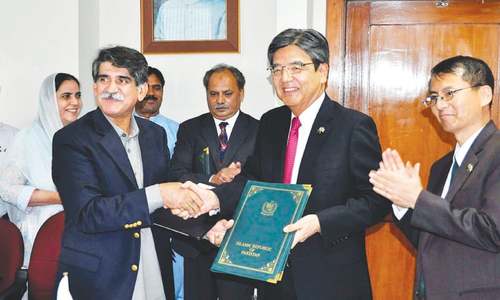
The inauguration ceremony for the Karachi radar on Wednesday was attended by Aviation Minister Ghulam Sarwar Khan, Consul-General of Japan in Karachi Isomura Toshikazu, Director-General of Pakistan Meteorological Department Sahibzad Khan and Chief Representative of Japan International Cooperation Agency (Jica) Furuta Shigeki.
“Thirty years ago, Japan supported the previous Karachi radar project with enthusiasm and I am excited to build on our effort to assist the disaster risk management in Pakistan”, said Consul-General Isomura while speaking on the occasion.
Jica chief representative said that the project would enable Pakistan to forecast weather more accurately and contribute to the disaster resilience in Pakistan.
The country had a high frequency of natural disasters such as floods, landslides, cyclones, and earthquakes, he said, adding that every year it experienced heavy damages due to floods triggered by heavy rains during the monsoon season.
Mr Shigeki announced that the Japanese government and Jica would continue to assist the disaster risk management initiatives of the Pakistan government.
Imran Ayub and Shahab Nafees also contributed to this report
Published in Dawn, March 10th, 2022