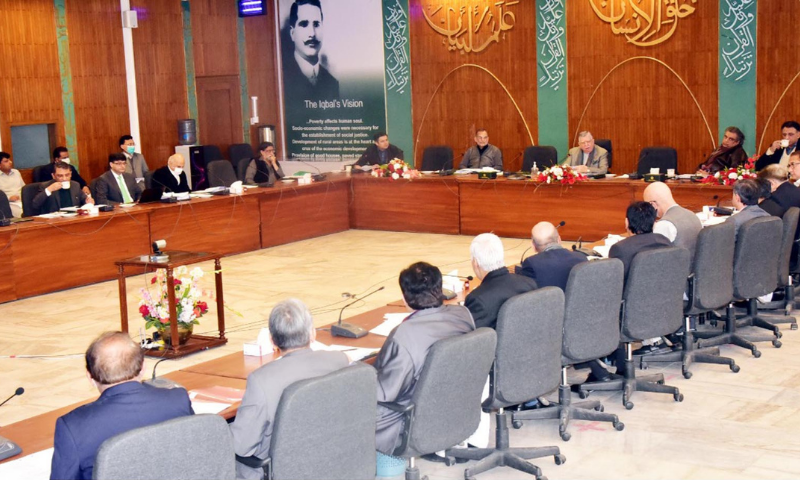
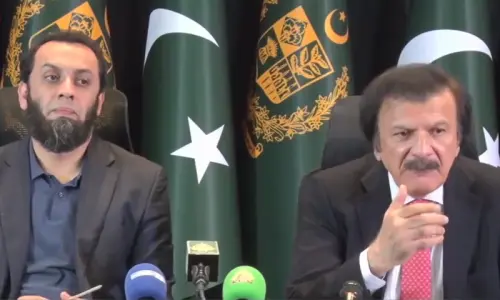
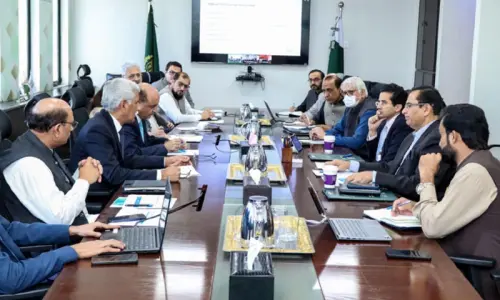
ISLAMABAD: The Economic Coordination Committee (ECC) of the Cabinet will take up today an 11-point agenda that includes the extension of lease to Chinese contractors of the Saindak copper-gold project and the revival of tax concessions to Chinese power producers as part of the efforts to attract investment to the second phase of the China-Pakistan Economic Corridor (CPEC).
To be presided over by Finance Minister Shaukat Tarin, the ECC will also consider a payment plan for public-sector power producers on the pattern of independent power producers (IPPs) as part of revised tariff agreements of 2020.
Metallurgical Corporation of China (MCC) and state-owned Saindak Metals Ltd (SML) signed an agreement in 2017 under which the Chinese firm kept on operating the Saindak copper-gold project for five years. The lease is set to expire on Oct 30. The two companies had originally signed in 2002 a 10-year contract, which was extended for five years in 2012. The terms of contract have been kept confidential all along.
MCC is now interested in bidding for Pakistan Steel Mills and is looking for fresh investments in special economic zones (SEZs) that are being set up under CPEC.
Likely to approve a payment plan for public-sector power producers
The deal is believed to involve the provincial government with about 25 per cent of the net profit along with royalties and duties. The terms of contract are often criticised by nationalist leaders for being unfavourable to Balochistan. The provincial government holds 35pc shares in the project while the centre owns 15pc. The remaining 50pc stakes are held by MCC. Later, the provincial government signed a separate agreement with the MCC-SML consortium that is valid until October 2027 but needs to be covered under a federal arrangement.
Sources said the ECC will also take up an alternative plan to protect 7.5pc withholding tax (WHT) on the profit to Chinese IPPs under original contracts instead of 25pc imposed in the 2019 budget under requirements of the International Monetary Fund (IMF) programme. The increase in the tax rate on profit from 7.5pc to 25pc has irked Chinese investors. The Power Division and the CPEC Authority have been making their case for the revival of a 7.5pc WHT rate because this was a departure from CPEC commitments.
However, the Ministry of Finance and the Federal Board of Revenue (FBR) have pointed out that a revival of the lower tax rate was not possible because of the IMF conditions. It entailed an annual revenue impact of about Rs60 billion while the government had to go for the seventh review of the ongoing loan programme next month. This could be indirectly sorted out through amendments to the Pak-China Double Taxation Agreement. The Pak-China Steering Committee had also called for addressing the issue as the Chinese considered it a unilateral violation of the power purchase agreements on part of Pakistan.
The sources said that at the time of the revision in tariff agreements in 2020, the government had committed to payments of Rs403bn to IPPs and, on the same pattern, about Rs355bn (as of June 2020) to public-sector plants, including nuclear projects of the Pakistan Atomic Energy Commission (PAEC), hydropower plants of Wapda and LNG plants of the National Power Parks Management Company.
While the payments to four dozen IPPs stood settled in a phased manner, the payables to public-sector plants had gone beyond Rs450bn by November 2020. The Power Division has now proposed the payment of about Rs190bn, including through a supplementary grant of about Rs80bn in current year and remaining Rs110bn through subsidy allocations in the next year’s budget, to address liquidity issues of PAEC, Wapda and LNG plants.
The ECC is also expected to approve about Rs6.9bn sovereign guarantees or standby letter of credit (SBLC) for the construction of the Sialkot-Kharian Motorway on a build-operate-transfer basis. Besides, it’s also likely to approve changes in the Petroleum Products Ordinance of 1961 through a statutory regulatory order that will enable the sale of LNG by Pakistan LNG Ltd to K-Electric for its 900-megawatt plant.
Published in Dawn, February 9th, 2022