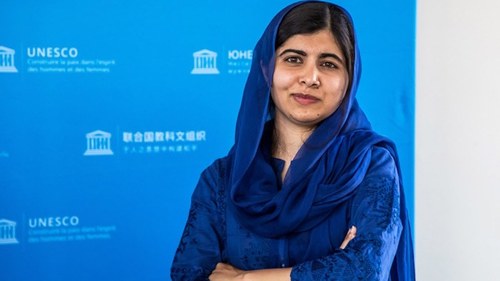
CONGRATULATIONS! That is the only appropriate response to Malala Yousafzai’s marriage announcement. But the world — or Twitterati at least — had much else to say. The response says more about contemporary feminism than Malala’s decision.
Naysayers have commented on Malala’s age, mission and previous sceptical position on marriage as a way to question her choice. Bangladeshi-Swedish writer Taslima Nasreen inappropriately expressed shock and said she expected Malala to “fall in love with a handsome progressive English man at Oxford” and marry after 30, thereby adding a dose of racism and classism to an inherently sexist debate.
Much of the uproar has come from liberals who have long championed Malala, the woman and all she symbolises. They see Malala’s decision to marry as an affront to feminism and antithetical to her mission, as if universal girls’ education cannot coexist with matrimony.
This flawed logic reveals something problematic about progressive, left-leaning viewpoints. Our discourse on all topics has become so polarised that (social) liberal views are as hardened — ironically, even conservative — in their expectations as conservative views are maligned for being.
Given Malala’s union is consensual, what is the problem?
The conservative view is that a girl should finish her FA, marry a man of her father’s choosing, breed and do the housework. But the backlash to Malala’s happy news seems to outline an equally prescriptive and constrained liberal view: a woman should study, prioritise her career, reject heteronormative matrimony, postpone (or avoid) procreation. In both scenarios, socially constructed expectations underscore what behaviour is deemed as acceptable.
Read: Malala shares why she was 'cautious' about marriage in the past
And that is anti-feminist. Feminism is the premise that men and women are equal and should have access to the same opportunities and resources. That women are free to make choices. And that they should not be compelled in those choices. In that context, given Malala’s union is consensual, what is the problem?
One problem, according to Malala’s detractors, is that she flip-flopped. Recently, in a Vogue interview she had questioned the institution of marriage, and championed partnerships. Four months later, she was married. I can personally think of nothing more feminist and empowered than confidently changing your mind and doing what you want, without letting anyone — society, or even your internalised expectations of yourself — prevent you from acting freely.
The consternation with Malala’s change of heart (quite literally!) also offers interesting insights. One is about society’s demands on public figures. They are expected to cease being human, immune to evolution, whimsy, or contradiction, and instead live as animated symbols. Malala symbolised female emancipation, which does not seem to sit comfortably with the idea of marriage.
Which brings us to another point: how strange and skewed the discourse about marriage has become, whereby it can only be perceived through an anti-feminist lens. It is historically accurate that marriage has long been a form of wealth transfer or exchange (in the form of exchanging a woman’s domestic labour and reproductivity for capital in the form of dowries or other bride wealth).
In the Pakistani context, it is difficult to think about marriage separate from this precedent. In rural and tribal areas, marriages remain a convenient way to settle debts and disputes, sort out property feuds, and pay off blood money. As Mukhtaran Mai told Deutsche Welle earlier this year, girls are “given away like animals”. In the urban and elite context, there is a pretence that marriage is about love and companionship. But it is still more often than not, and explicitly or implicitly, a strategic effort to expand and better the kinship group. Marrying into the ‘right’ families is a clear route to increasing social capital or accessing wealth.
In many cases, there cannot even be a facade of consent. According to the Pakistan Demographic and Health Survey 2017-18, 3.3 per cent of girls are married under the age of 15 while 18.3pc are married under 18.
Malala herself was drawn into the narrative whereby marriage is a negation. She writes: “I questioned the patriarchal roots of the institution.… I feared losing my humanity, my independence, my womanhood.”
But it’s lazy to fail to separate patriarchal practice from a ritual commitment, and to emphasise that the latter can be whatever people (whoever they may be!) choose for it to be. As long as there’s a choice. As Malala put it best herself, “culture is made by people — and people can change it too”.
So let’s start to effect that change by spending no more time worrying about Malala’s marital status and focusing instead on her message and mission, and the activities of the Malala Fund (recognising this article’s complicity in the former). All that’s left to say is Mubarak Malala! Now let’s get back to those 130 million girls globally who are missing out on school.
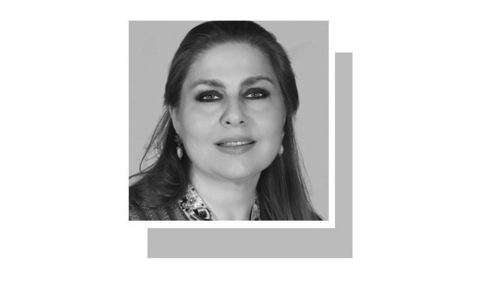
The writer is a political and integrity risk analyst.
Twitter: @humayusuf
Published in Dawn, November 15th, 2021