0
0

• Says a spoiler can’t be peacemaker
• FO strongly condemns attacks in Kabul
• Pakistan, Uzbekistan sign protocol on joint security commission
• Uzbekistan security council secretary calls on FM
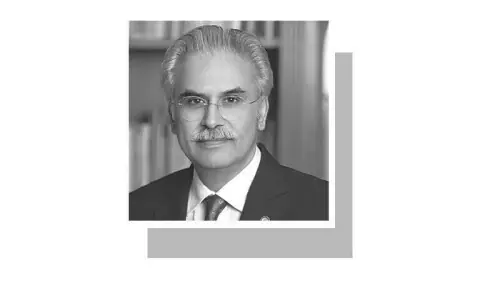
ISLAMABAD: National Security Adviser (NSA) Dr Moeed Yusuf has declined an invitation from India to attend a meeting of the national security advisers (NSAs) of regional countries on Afghanistan.
“……I am not going. A spoiler cannot be a peacemaker,” he remarked when asked whether Pakistan will be participating in the conference being hosted by India.
He was addressing a news conference here on Tuesday after Pakistan and Uzbekistan signed a Protocol on the Establishment of Joint Security Commission, followed by the inaugural session of the commission.
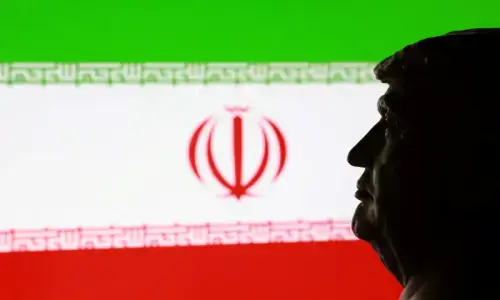
India had formally invited the NSAs of Russia, Iran, China, Pakistan, Tajikistan and Uzbekistan for the conference, slated to be held next week.
Dr Yusuf regretted the international community’s silence over human rights violations and Indian state-sponsored terrorism in occupied Kashmir, and New Delhi’s expansionist vision that is leading the region nowhere.
Asked what hurdles Pakistan was facing in the region to achieve peace and progress, the NSA said: “I think the region’s obstacles are in front of you, there is no need for debate on this.”
He said as long as India’s behaviour and ideology remain unchanged, the peace process in the region could not move forward. “The world has unfortunately kept its eyes closed and isn’t talking to India as it should,” he lamented.
He observed that peace and stability in Afghanistan were vital for Pakistan, making it clear that disengagement with Afghanistan was not an option for Pakistan.
The NSA said Pakistan was criticised sometimes for being proactive in promoting engagement with Afghanistan. Explaining the rationale behind the stance, Dr Yusuf said: “It may be a luxury for the Western world sitting 10,000 miles away to ignore Afghanistan, but we do not have any option to disengage from Afghanistan.”
He said that with peace in Afghanistan, if established, the country could become a major hub as a corridor of connectivity. For Pakistan, he explained, engagement with Afghanistan was not a political matter but a “humanitarian one and a matter of our national security”.
Dr Yusuf said the world needed to coordinate and constructively engage with the present Afghan government to avert a humanitarian crisis for the sake of the Afghan people, warning that a worse situation might develop if this was not done. This was not a matter of the Taliban or some other government but of the ordinary Afghan people, he reiterated.
Asked to comment on the accusation levelled by Special Assistant to the Prime Minister on China-Pakistan Economic Corridor Authority (CPEC) Affairs Khalid Mansoor that the US was trying to derail the project, he said he had talked to Mr Mansoor himself on the matter and “we confirmed that he was quoted completely out of context”.
Dr Yusuf said Uzbekistan shared the same stance with Pakistan on Afghanistan and there was a detailed discussion on the issue in today’s (Tuesday) meeting.
Sharing the issues discussed and details of the newly set up commission, the NSA said it encompassed matters ranging from transnational crime, drug trafficking, cooperation against terrorism and mutual capacity building in areas such as disaster management. He explained that it was decided that working groups would be established and the previous agreements would be “revitalised” and taken forward in the same way.
Pakistan had perhaps not benefitted from its geographical position in the past as it should have but under the present government’s geo-economic paradigm, the process of connectivity via Pakistan was important, he added.
The Central Asian states would be a “crucial element” in the future for fulfilling Pakistan’s geo-economic vision, he said, adding that Uzbekistan, in particular, had a “critical role” to play.
According to a press release issued by the National Security Division, Dr Yusuf met Secretary of the Security Council of the Republic of Uzbekistan Lieutenant General Victor Makhmudov, who is here on a three-day visit.
About the protocol signed by the two countries, the press release stated that it covered wide-ranging security-related matters of mutual interest and put in place a coordination mechanism between Pakistan’s National Security Division and the Security Council of Uzbekistan.
Lt Gen Victor Makhmudov, Uzbekistan Security Council secretary, also called on Foreign Minister Shah Mahmood Qureshi and discussed with him matters of mutual interest, including defence and military cooperation.
Meanwhile, the Foreign Office strongly condemned terrorist attacks near Sardar Mohammad Daud Khan hospital in Kabul in which many innocent people lost their lives.
Published in Dawn, November 3rd, 2021