1
1


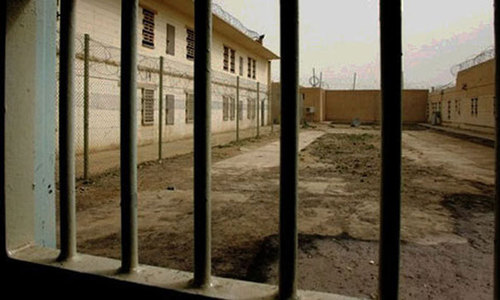
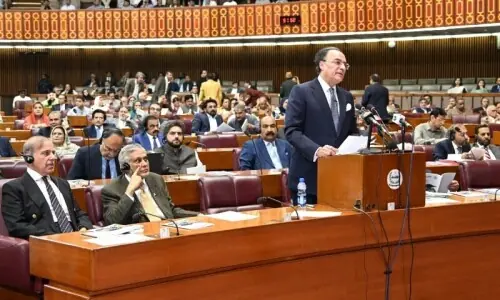
HYDERABAD: Sindh Chief Minister Syed Murad Ali Shah has said that his government is committed to transforming prisons into true reformatories and correctional facilities in order to make inmates useful members of society.
He was speaking at ceremony held here on Tuesday for the handing over of the Prisons Management Information System (PMIS) to the provincial government and inauguration of the Sindh Prisons Staff Training Institute.
He thanked the UN Bureau of International Narcotics and Law Enforcement Affairs and the UN Office of Drugs and Crime (UNODC) for their support in establishing these facilities.
“Unfortunately, it’s failure of government, civil society and legislature that we have to have inmates in prisons. We need to make sure that when inmates come out of prisons, they become better persons and contribute to society positively. For this, we need to train our staff,” Mr Shah said.
Murad renews commitment to transform jails into reformatories
He said Sindh government had replaced a century-old prison law in 2019 with a forward looking enactment. He hoped that the facility just put in place would go a long way in making sure that prisons staff implemented the new law. He noted that other provinces were looking for updating their prisons law. He specifically recalled how the authorities in 1999 had claimed to have forgotten an inmate when he came to seek his bail.
“The system won’t forget any inmate. Each and every prisoner will be counted. It will enable the chief minister to press a button to know how many inmates are in jail,” he said.
The CM said that Sindh used to be crime-free until late 70s and early 80s when a culture of Kalashnikov and drugs entered this province and people were faced with it over 40 years on.
He said prisons had become places where hardened criminals not only created problems for the staff but also produced more criminals by recruiting inmates with minor offences.
He pointed out that his government was establishing a security prison in Thatta to keep only hardened criminals. Inmates with minor offences would be kept in other jails, which would be made proper correctional facilities, he added.
Mr Shah also sought the UN institutions’ help in eliminating use of drugs from the province. “The Hyderabad division has a major problem. We need to do away with this menace as it is affecting our future generations,” he said.
US Consul General at Karachi Mark Stroh told the audience that his country valued its relations with Pakistan. US remained the largest contributor to Pakistan in civilian assistance, he said. “Our ties are deep, broad and longstanding,” he added.
He said that for 40 years, US worked together with Pakistan to improve security and law enforcement agencies’ capacity across Pakistan. Since 2002, the INL had been trying to build and improve their long-term sustainable expertise and operational and professional capacity. “It’s aimed at strengthening rule of law and justice in Pakistan,” he said.
Mark Tervakoski, the director of the US embassy’s International Narcotics and Law Enforcement Section, said that 600 prison staff would be trained every year at the newly established institute.
The PMIS has been set up at 22 prisons in Sindh to keep a track of inmates, their security, visitations and record. It would streamline the system and make it more humane to have a lasting impact by training correctional staff and digitise inmates’ record and their cases.
He said through this project, US would bring Pakistan’s prisons practices in line with international standards and ultimately increase effectiveness of the country’s criminal justice and correctional systems.
UNODC representative Jeremy Milsom said the system would rid the prison authorities of time consuming paper work. The robust PMIS would reduce administrative work and speedup responsiveness to inmates’ needs.
Published in Dawn, November 3rd, 2021