0
0


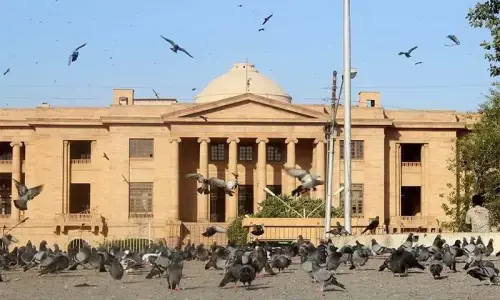
KARACHI: Recently, Karachi Administrator Murtaza Wahab visited Frere Hall and inaugurated a conservation project on the occasion of the 156th anniversary of the historical building’s opening to the public. As per news reports, the Karachi Metropolitan Corporation (KMC), the US Consulate in Karachi and the Sindh Exploration and Adventure Society will be partners in the restoration attempt. While it’s a praiseworthy announcement, there are certain things that need to be taken into account here.
Not too long ago, a Guardian Board was set up comprising the city’s known social figures, with a fair degree of media attention and fanfare, for more or less a similar purpose. And it was done established the consent of the then mayor of Karachi, Waseem Akhtar. A little later, certain things unfolded and the aboard detached itself from the goings-on. (Not our subject.) But whoever seeks to do give a touch-up job to this marvellous piece of construction tries to do so with assistance, monetary or moral, from those who can assist — from the world outside or within Pakistan. Nothing wrong with that, too.
That said, Karachi has hundreds of beautiful works of stonemasonry made in colonial times. This means they — a vast majority of them — were built by the British. They were the ones who first tapped urban potential of this small little fishing village and turned it into a gorgeous coastal town. As a result, up until 1947, and even a little after that, Karachi was a city that boasted breathtaking architecture and spick and span environment. How did the British manage to do that? Well, there are many answers to the question, and one of them is, they were extremely fond of Karachi.
Anything built with affection and care looks pleasing to the eye and soothes one’s senses. The British settled in Sindh in the 1840s and remained here for more than a century. When you make a town your home, you look after it with all your heart and soul. And that’s exactly what those who intend to ‘restore’ the lost glory of the city must keep in mind. Because when we talk about a structure such as Frere Hall, we don’t even mention who it’s named after and what services that person rendered to Karachi.
Henry Bartle Frere was a former commissioner of Sindh. He served from 1851 to 1859 and in the early 1860s became the governor of Bombay. Inarguably, he was the most famous of commissioner of Sindh representing the time when the British held sway in the region. Even today, more than 70 years after independence, he is probably one of the very few British officers whose name rings a bell, even to those who are not history buffs.
Experts suggest that Frere Hall was the imperialist rule’s first public building. Bartle Frere had five children. Mary, the eldest, was a poet and the author of the book Old Deccan Days — stories put together from oral tradition. Imagine, that’s the kind of rich history that Frere Hall is all about! So, if it’s to be restored, first and foremost, it needs affection.
Published in Dawn, October 21st, 2021