Serbs lift roadblocks in Kosovo, Nato moves to end car plate row
JARINJE: Kosovo’s border crossing with Serbia was reopened on Saturday as Serbs removed trucks and cars and Nato troops moved in under a European Union-mediated deal to end a dispute between the neighbouring countries over car licence plates.
Kosovo special police forces withdrew from the border crossing in the north of the country nearly two weeks after Serbs blocked roads to protest at Kosovo’s decision to introduce temporary licence plates for all cars from Serbia.
The Kosovo government said the licence plate requirement was imposed in retaliation for Serbian measures taken against drivers from Kosovo since 2008, when Kosovo declared independence from Serbia.
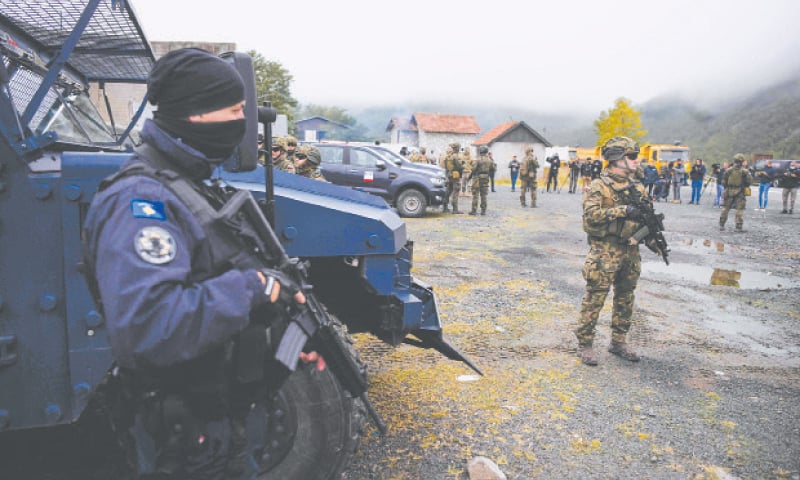
“From this weekend and for the next two weeks, KFOR will maintain a temporary, robust and agile presence in the area, in accordance with the mentioned arrangement,” said a statement by the Nato-led peacekeeping force, called KFOR.
Serbia, which lost control over Kosovo after Nato bombing in 1999, does not recognise Kosovo’s independence and therefore its right to take actions such as registering cars.
This month’s confrontation boiled over into violence, but the two countries — with mediation by EU special envoy Miroslav Lajcak — struck a deal on Thursday.
Under the deal, stickers will be used on licence plates to cover state symbols, and Nato, which has some 3,000 troops in Kosovo, will be allowed to control the area.
Local Serbs chatted on Saturday with Slovenian soldiers, who are part of the Nato force, as they removed barricades while Kosovo police vehicles stood at the border crossing. The deadline for their withdrawal was 4pm.
As Serbia moves towards EU membership it must resolve all outstanding issues with Kosovo. The two parties agreed to an EU-mediated dialogue in 2013, but little progress has been made.
Kosovo’s independence was backed by Western countries including the United States and Britain, but it is still not recognised by five EU member states and its membership of the United Nations is blocked by Serbia’s traditional ally Russia.
Published in Dawn, October 3rd, 2021