WHO team meets Taliban in Kabul, says health system faces collapse


ISLAMABAD: Not only the adolescents in the age group of 15 to 17 years have responded poorly to the recent government initiative to vaccinate them against Covid-19 but a large number of adults also seem reluctant to get their second jab as health experts find behavioural issues rather than government slackness behind their slow response.
Less than 25 million people, including overseas Pakistanis who got shots from abroad before getting registered here, have been fully vaccinated against the coronavirus so far, whereas more than 55 million have received only first dose of the vaccine, according to the National Command and Operation Center (NCOC), which has fixed Sundays for only them to complete their vaccination.
Prof Dr Javaid Usman, a microbiologist, believes the slow response was because of general behaviour of the masses. “It seems people get themselves vaccinated only to become eligible to travel in the public transport and attend events.”
This clearly indicated that people still had not understood that vaccine was for their protection, he said. “Now as the NCOC has been tightening the noose by allowing facilities for only fully vaccinated people, it is hoped that more people will get a second dose as well,” he believed.
Currently, he said, around a million people were being administered vaccine on a daily basis. Of them, 600,000 receive the first dose and 400,000 get the second dose, he added.
“People should understand that fully vaccinated people have fewer chances to develop complication,” he said.
According to the latest NCOC data, the coronavirus claimed 47 more lives, as 2,333 more cases were reported from across the country in a single day. Till Wednesday, there were 4,641 critical cases in the country.
WHO team meet Taliban
According to a statement of World Health Organisation (WHO), a high-level delegation met senior members of the Taliban leadership, UN partners, health care workers and patients in Kabul.
The WHO observed: “Afghanistan’s health system is on the brink of collapse. Unless urgent action is taken, the country faces an imminent humanitarian catastrophe. Our visit allowed us to witness the immediate needs of the Afghan people firsthand and meet with stakeholders to define ways to urgently scale up our health response.
“Acting on the UN principles of neutrality and independence, we engaged in constructive dialogue to address differences and find solutions that will allow us to continue our life-saving work for millions of innocent Afghans affected by decades of conflict. Throughout our visit, we focused on a number of priority health issues that need immediate attention, as well as the need to invest in achieving longer-term development goals.”
Medical supplies hit
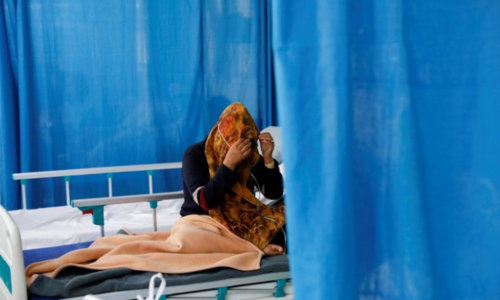
“Cuts in donor support to the country’s largest health project, Sehetmandi, has left thousands of health facilities without funding for medical supplies and salaries for health staff. Many of these facilities have now reduced operations or shut down, forcing health providers to make hard decisions on who to save and who to let die. Only 17pc of all Sehatmandi health facilities are now fully functional. This breakdown in health services is having a rippling effect on the availability of basic and essential health care, as well as on emergency response, polio eradication, and Covid-19 vaccination efforts,” it stated.
“Nine of 37 Covid-19 hospitals have already closed, and all aspects of the Covid-19 response have dropped, including surveillance, testing, and vaccination. Prior to August this year, 2.2 million people had been vaccinated against Covid-19. In recent weeks, vaccination rates have decreased rapidly while 1.8 million Covid-19 vaccine doses in country remain unused. Swift action is needed to use these doses in the coming weeks and work towards reaching the goal of vaccinating at least 20pc of the population by the end of the year based on national targets,” it stated.
Published in Dawn, September 23rd, 2021