Delta hits US hiring in new setback for Biden


 0
0
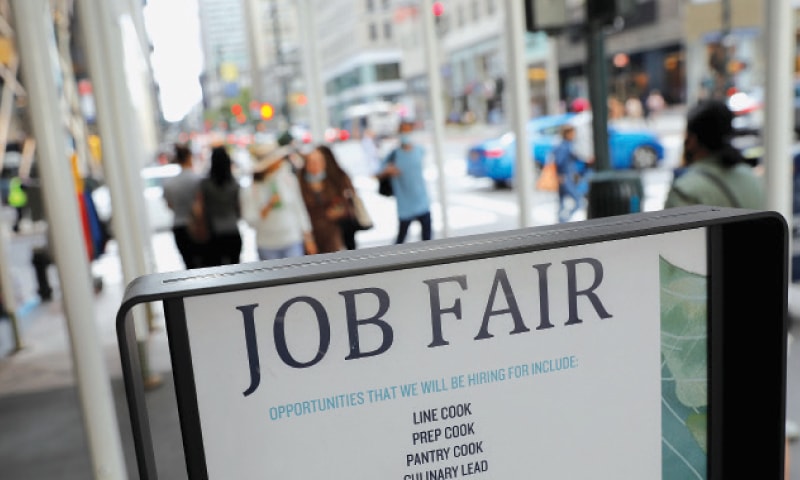

The United States added far fewer jobs than expected in August as businesses grappled with the Delta wave of Covid-19, a major disappointment and yet another complication for President Joe Biden’s plans to remake the world’s largest economy.
Employment rose by just 235,000 jobs last month, according to Labour Department data released last Friday, and while the unemployment rate fell to a pandemic low of 5.2 per cent, the report was nowhere near the job gains seen in recent months, which have topped one million.
In some ways, the lacklustre hiring told a familiar tale, with the world’s largest Covid-19 outbreak once again hurting the labour market and underscoring that it is unlikely to make much improvement if infections remain high.
Employment rose by just 235,000 jobs last month and while the unemployment rate fell to a pandemic low of 5.2pc, it was nowhere near the job gains seen recently
Biden, who is negotiating the passage of two massive spending bills through a Congress where even his ostensible allies have shown a willingness to defy him, said he had pulled the country from “economic free fall.” “What we’re seeing is an economic recovery that is durable and strong,” he said in a speech from the White House.
But he acknowledged the job numbers fell short of expectations and added a sombre message: “We have a lot more work to do.” The president is urging Congress to enact both a $1.2 trillion infrastructure overhaul and a $3.5tr social welfare package. But last week, a moderate senator urged fellow Democrats to delay voting on the latter bill, which cannot pass without his support.
The Federal Reserve is also paying close attention to the data, as it could impact when it begins slowing its massive purchases of bonds meant to help the economy weather the pandemic.
Chair Jerome Powell has signalled that could start by year’s end.
No good news
The August payroll increase was sharply lower than the upwardly revised 1.1m positions added in July, and considerably below the 750,000 new jobs expected by analysts.
The weak hiring comes as states and businesses impose mask-wearing requirements and other restrictions to fend off the fast-spreading Delta variant.
Covid-19 vaccines have allowed for strong rehiring in recent months after more than 20m people lost their jobs when the pandemic began last year, but as of August 5.3m positions still haven’t been recovered, according to the Labour Department report.
The leisure and hospitality sector, which bore the brunt of the pandemic’s initial layoffs, had added an average of 350,000 jobs per month over the last six months, but in August it added zero positions, the data said.
There was no improvement either in the labour force participation rate indicating the share of people employed or looking for work, which was at 61.7pc in August, around the range it has hovered at for more than a year.
Adult men and white Americans saw their unemployment rates decline, but joblessness remained widespread for others, including Hispanics, for whom unemployment was 6.4pc, and Black Americans, which saw a 0.6pc jump to 8.8pc unemployment.
The number of people reporting they could not work because their employer lost business or closed due to the virus rose to 5.6m from 5.2m in July.
“September likely will be weak too, and we’re becoming nervous about the prospects for a decent revival in October, given that behaviour lags cases and cases are yet to peak,” Ian Shepherdson of Pantheon Macroeconomics said.
Big wage jump
In an interview with CNBC, National Economic Council Director Brian Deese said, “even with the headwinds of Delta... we have an economy that’s able to continue generating durable job growth,” pointing to employment gains since Biden took office in January.
Industries that did add jobs last month include professional and business services, which rose by 74,000, transportation and warehousing, which gained 53,000, and private education, which added 40,000, though state government education and local government education saw declines.
A positive surprise was seen in wages, where average hourly earnings rose 0.6pc to $30.73 after four straight months of increases.
Published in Dawn, The Business and Finance Weekly, September 6th, 2021