Israeli PM will urge Biden not to revive Iran deal


 8
8


WASHINGTON: President Joe Biden and Israeli Prime Minister Naftali Bennett are set to hold their first face-to-face meeting on Friday, and Israel’s new leader intends to press Biden to give up his pursuit of reviving the Iran nuclear deal.
Before arriving in Washington, Bennett made it clear the top priority of the visit to the White House was to persuade Biden not to return to the nuclear accord, arguing Iran had already made progress in uranium enrichment, and that sanctions relief would give the country more resources to back Israel’s enemies in the region.
The meeting, originally scheduled for Thursday, was put back as Biden met national security aides following explosions near Kabul airport.
The Israeli leader met separately on Wednesday Secretary of State Antony Blinken and Defence Secretary Lloyd Austin to discuss Iran and other issues. The visit is his first to the US as prime minister.
Bennett told his cabinet before the trip that he would tell the American president that “now is the time to halt the Iranians, to stop this thing and not to re-enter a nuclear deal that has already expired and is not relevant, even to those who thought it was once relevant”.
Biden has made clear his desire to find a path to salvage the 2015 landmark pact cultivated by Barack Obama’s administration but scuttled in 2018 by Donald Trump’s. But US indirect talks with Iran have stalled and Washington continues to maintain crippling sanctions on the country as regional hostilities simmer.
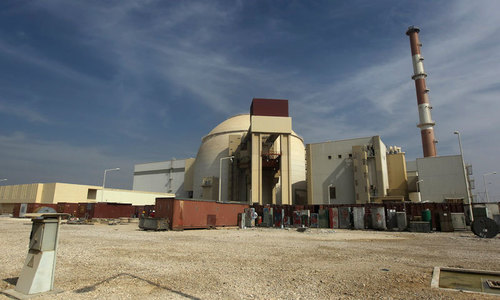
Trump’s decision to withdraw from Iran’s nuclear deal led Tehran to abandon over time every limitation the accord imposed on its nuclear enrichment. The country now enriches a small amount of uranium up to 63 per cent, a short step away from weapons-grade levels, compared with 3.67pc under the deal.
It also spins far more advanced centrifuges and more of them than were allowed under the accord, worrying nuclear nonproliferation experts even though Tehran insists its programme is peaceful.
The Biden-Bennett sit-down comes weeks after Ebrahim Raisi was sworn in as Iran’s new president.
Raisi, 60, has suggested he’ll engage with the US. But he also has struck a hard-line stance, ruling out negotiations aimed at limiting Iranian missile development and support for regional militias, something the Biden administration wants to address in a new accord.
Administration officials acknowledged that Iran’s potential breakout, the time needed to amass enough fissile material for a single nuclear weapon, is now down to a matter of months or less.
Published in Dawn, August 27th, 2021