4
4


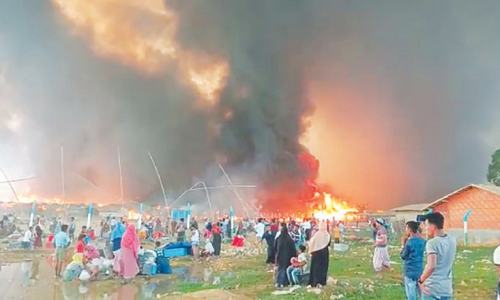
DHAKA: Days of heavy rainfall have pounded Rohingya refugee camps in southern Bangladesh, destroying dwellings and sending thousands of people to live with extended families or in communal shelters.
In the 24 hours until Wednesday afternoon, more than 30 centimetres (11.8 inches) of rain fell on the camps in Cox’s Bazar district hosting more than 800,000 Rohingya, the UN refugee agency said.
That’s nearly half the average July rainfall in one day, and more heavy downpours are expected in the next few days and the monsoon season stretches over the next three months.
The situation is further compounded by the Covid-19 pandemic.
There is currently a strict national lockdown in response to rising cases across the country, the agency said.
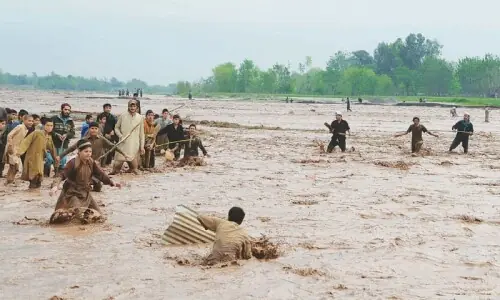
It said six people died in the camps earlier this week five people in a landslide caused by the rains and a child swept away by floodwaters.
Citing initial reports, the UN High Commissioner for Refugees said more than 12,000 refugees were affected by the heavy rain and an estimated 2,500 shelters were damaged or destroyed.
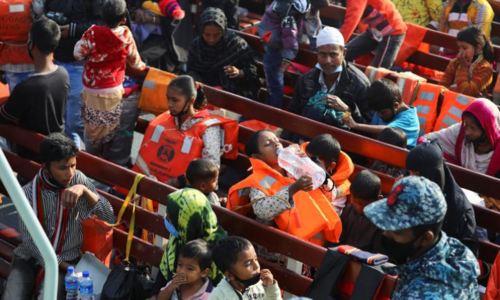
More than 5,000 refugees have been temporarily relocated to other family members’ shelters or communal facilities, the agency said in a statement.
Hannah Macdonald, a spokesperson for the UNHCR, said in an email that emergency response teams have been deployed to help affected families.
Refugees said they were struggling to eat and drink properly.
Due to the continuous rainfall for the last four days, today my house is full of water, said Khatija Begum, who has five children. We are not even able to eat. Begum said she fears her children will drown and die in their sleep.
The refugee agency said the bad weather, landslides and floods have further exacerbated the suffering and humanitarian needs of the Rohingya refugees in Bangladesh.
Cyclones, heavy monsoon rains, floods, landslides and other natural hazards are an annual difficulty in the camps. More than 700,000 Rohingya have fled to refugee camps in Bangladesh since August 2017, when the military in Buddhist-majority Myanmar began a harsh crackdown on the Muslim ethnic group following an attack by insurgents.
The crackdown included rapes, killings and the torching of thousands of homes, and was termed ethnic cleansing by global rights groups and the United Nations. While Bangladesh and Myanmar have sought to arrange repatriations, the Rohingya are too fearful to return home.
The International Organisation for Migration says Cox’s Bazar district, where more than 1 million Rohingya refugees live, is one of the most disaster-prone parts of Bangladesh.
It is a delta nation crisscrossed by many rivers that regularly receives intense rainfall due to its monsoon climate and location on the Bay of Bengal, where the warm waters can generate destructive tropical cyclones.
Published in Dawn, July 30th, 2021