Rahul Gandhi demands India inquiry into Pegasus claims


 31
31


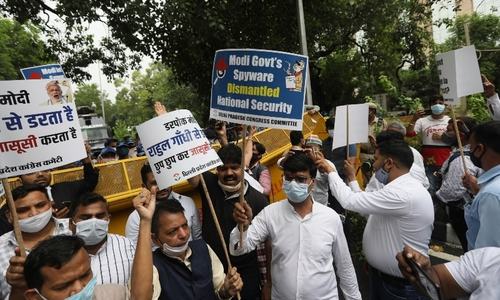
Indian Prime Minister Narendra Modi's main political rival Rahul Gandhi on Friday demanded an inquiry into the Pegasus spyware scandal, accusing the government of “treason”.
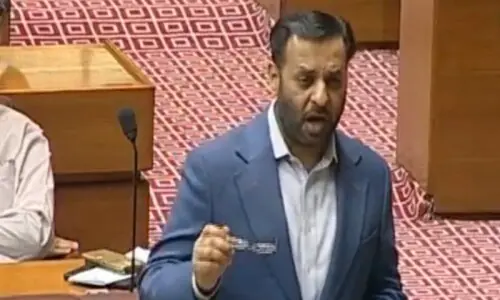
Gandhi is one of dozens of Indian politicians, journalists and government critics on an alleged global database of 50,000 possible Pegasus spying targets that was revealed by an international group of media outlets. At least one number once used by Prime Minister Imran Khan was also on the list.
The Indian government has rejected spying claims although critics note it has not said whether it is a client of NSO Group, the Israeli maker of the Pegasus spyware which effectively captures a target's cellphone.
The claims have sparked uproar in the Indian parliament, with one opposition parliamentarian — since suspended — on Thursday snatching and ripping up the text of a statement on the subject being delivered by IT minister Ashwini Vaishnaw.
“Pegasus is classified by the Israeli state as a weapon and that weapon is supposed to be used against terrorists,” Gandhi, 51, told reporters in New Delhi. “The prime minister and the home minister have used this weapon against the Indian state and against our institutions. The only word for this is treason.... and this has to be investigated.”
The alleged database of phone numbers included more than 1,000 in India, with the owners of 300 of them identified in the media reports.
It is not known how many of the phones on the list were actually targeted for surveillance or how many attempts were successful.
Dalai Lama aides among targets
But according to Indian news website The Wire — one of the media outlets given access to the database by two rights groups — mounting forensic evidence suggests one or more official agency has been using the spyware.
Other possible targets revealed in the reports on Thursday include aides to Tibetan spiritual leader Dalai Lama, who lives in exile in India, and businessman Anil Ambani.
Pegasus spyware: How does it work?
Modi's government has said that any covert surveillance — which has a long history in India — is done in accordance with strict rules and oversight.
Ministers have said the release of the reports by the global media consortium was deliberately coordinated to coincide with the eve of the current session of the Indian parliament.
On Thursday, the chief minister of Assam state, an ally of Modi, called for Amnesty International — which along with French media nonprofit Forbidden Stories gave the group of newspapers access to the database — to be banned in India.
“Amnesty International is a partner in this investigation. Now we all know the role of Amnesty. They are encouraging left-wing terrorism in India... working overnight to defame the country,” Himanta Biswa Sarma said.
A clutch of organisations representing journalists called for a Supreme Court-monitored probe into the alleged snooping.
“This is a moment that demands deep introspection and inquiry into the kind of society we are heading towards, and how far we may have veered away from the democratic values enshrined in our constitution,” the Editors Guild of India said.