PPP seeks parliament’s joint session to discuss security

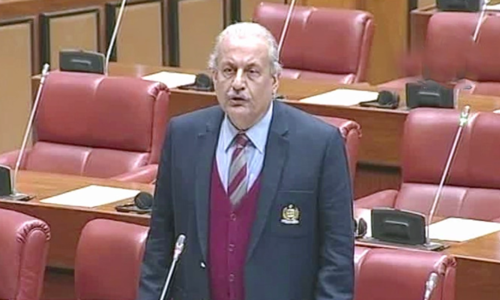
ISLAMABAD: Expressing concern over what he called the worsening internal security situation in the country, Pakistan Peoples Party (PPP) Senator Raza Rabbani on Monday called for convening an in-camera joint session of parliament and constitution of a parliamentary committee on national security (PCNS) for drafting a consensus strategy paper.
The PPP senator in a statement suggested a way forward to achieve a national consensus to deal with the internal security issues which the country could face in the wake of the regional situation and after the complete withdrawal of US troops from Afghanistan.
Mr Rabbani demanded that officials of the ministries of defence, interior and foreign affairs give a comprehensive briefing to parliamentarians before a full-fledged debate on the security situation.
Rabbani says over 150 acts of terrorism have taken place during the past two months
In the light of the debate and briefings in parliament and after consultations with all stakeholders, including the military officials, he said, the new parliamentary committee on national security should then draft a consensus strategy paper.
The strategy paper, he said, then must be presented before parliament for approval.
“This strategy paper will be read in extension to the Terms of Agreement approved by the joint session of parliament on April 12, 2009,” said Mr Rabbani, who had previously headed a similar parliamentary committee on national security.
Military officials, including Army Chief Gen Qamar Javed Bajwa and head of the Inter-Service Intelligence (ISI) Lt Gen Faiz Hameed, had given a comprehensive briefing to parliamentary leaders of all parties in the National Assembly and Senate and members of the PCNS on July 1 on the emerging regional situation.
However, the members of political parties, including the ruling Pakistan Tehreek-i-Insaf (PTI), have been demanding a joint sitting of parliament on the issue, saying merely a briefing to senior party members would serve no purpose.
At present, National Assembly Speaker Asad Qaiser is heading the PCNS which comprises members of all parties.
Mr Rabbani regretted that the internal security situation continued to deteriorate as over 150 acts of terrorism had taken place over the past two months, particularly in the merged areas of the erstwhile Federally Administered Tribal Areas (Fata) in Khyber Pakhtunkhwa and Balochistan.
“As the situation further develops in Afghanistan, its fallout will become more pronounced in Pakistan in the shape of rise in extremism, activation of sleeper cells, acts of terrorism aided and abetted by RAW and other agencies,” warned Mr Rabbani, adding that unexpected incidents like abduction of the Afghan ambassador’s daughter and subsequent withdrawal of the ambassador by Kabul would put Pakistan under pressure.
The PPP senator said that complex question of the fresh wave of Afghan refugees, if that happened, could not be solely addressed by the fenced border. A comprehensive plan, both internally and internationally, would be required, he added.
On the other hand, he said, the role of the United States in the region would not culminate by their withdrawal as the US would seek a presence in the region through proxies or agreements with countries of the region to facilitate their surgical strikes.
Mr Rabbani said that the terrorist incident in Dasu had been condemned, but it showed another dimension of the complex situation Pakistan was facing. The purpose of this incident, he said, was to bring under heavy weather China-Pakistan Economic Corridor (CPEC) and the strategic relationship between Pakistan and China.
“To face these among other challenges which have already started to knock at our door, a national and bipartisan approach is required,” he concluded.
Published in Dawn, July 20th, 2021