Risk of Covid spread is ‘zero’, IOC chief says ahead of Tokyo Games

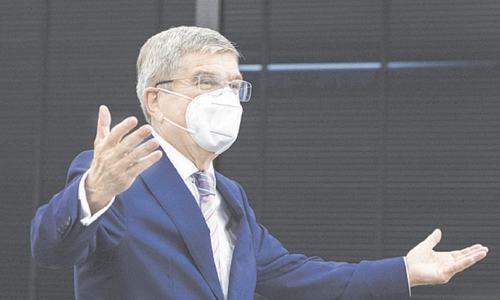
TOKYO: International Olympic Committee President Thomas Bach said on Thursday there was “zero” risk of Games participants infecting Japanese residents with COVID-19, as cases hit a six-month high in the host city.
“Risk for the other residents of Olympic village and risk for the Japanese people is zero,” Bach said, adding that Olympics athletes and delegations have undergone more than 8,000 coronavirus tests, resulting in three positive cases.
Those cases have been placed in isolation and their close contacts are also under quarantine protocols, Bach said at the beginning of talks with Tokyo Governor Yuriko Koike and Tokyo 2020 President Seiko Hashimoto.
With just over a week until Tokyo 2020 opens for events mostly behind closed doors, organisers insist they can be held safely as long as athletes, officials and journalists adhere to strict anti-virus regulations.
But an athlete in Japan tested positive for the virus along with five Olympic workers, mostly contractors, as Tokyo recorded 1,308 new cases, its highest daily tally since late January.
Bach said a trip to the Olympic Village on Thursday morning had convinced him that anti-virus rules are “in place, and they are working, and they are enforced”.
“We could see and convince ourselves that all the delegations are following the rules and are supporting the rules, because they know it is in their own interest to be safe,” he said. “It’s in their interest and in solidarity with the people of Tokyo.”
The capital is currently under a virus state of emergency, less strict than a blanket lockdown, which limits alcohol sales and curbs restaurant opening hours. The measures will continue throughout the Olympics.
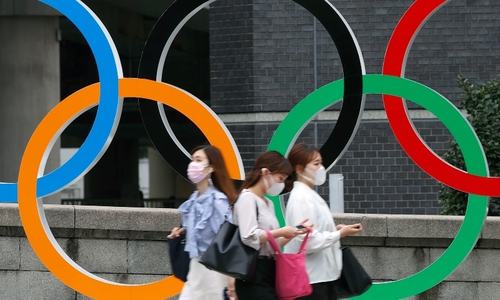
Postponed last year due to the Covid-19 pandemic, the Summer Olympics have little public support in Japan amid widespread fears about a further spread of the coronavirus.
Critics of the plan to hold the Tokyo Olympics — which were postponed by a year due to the pandemic — submitted a petition on Thursday that has garnered more than 450,000 signatures this month, Japanese media reported.
Organisers have imposed Olympics “bubbles” to prevent further transmissions of Covid-19, but medical experts are worried that they might not be sufficiently tight.
A number of infections have emerged among several visiting athletes and people involved with the Games.
An Olympic athlete under a 14-day quarantine period has tested positive in Tokyo, the organising committees’ website reported on Thursday, without disclosing any details about the athlete.
Eight members of the Kenyan women’s rugby team, who were set to hold a training camp in Kurume in southwestern Japan, were classified as close contacts of a passenger on their flight to Tokyo who tested positive for coronavirus, a city official said.
The eight athletes had all tested negative on arrival at the airport, the official added, and will be staying at an accommodation facility in Tokyo until the Games.
Separately, a staff member with the Russian rugby sevens team was hospitalised after testing positive, an official in their host town Munakata in western Japan said.
The team of 16 athletes and 10 staff members landed at a Tokyo airport on July 10, and has had no close contact with local officials or residents since then, he said.
The rest of the team is now quarantined in their accommodation, but if they test negative on Thursday, they will be able to resume training as early as Friday, the official added.
Kyodo news agency reported Thursday that organisers are considering having fewer than 1,000 VIPs and dignitaries at the opening ceremony in the 68,000-seat National Stadium.
Published in Dawn, July 16th, 2021