Remains of 19 Srebrenica massacre victims buried 26 years after genocide


 5
5


SREBRENICA: Nineteen newly identified victims were honoured and buried on Sunday in Bosnia as thousands gathered to commemorate the 1995 Srebrenica massacre, Europe’s only acknowledged genocide since World War II.
The slaughter of more than 8,000 Muslim Bosniaks, most of them men and boys, by Bosnian Serb forces was commemorated in speeches, prayers and song, followed by the reburial of victims whose remains were found in mass graves and recently identified through DNA analysis.
The Srebrenica killings were the bloody crescendo of the 1992-95 war in Bosnia, which came after the break-up of Yugoslavia unleashed nationalistic passions and territorial ambitions that set Bosnian Serbs against the country’s two other main ethnic factions Croats and Bosniaks.
The massacre has been declared a genocide by international and national courts, but Serb leaders in Bosnia and neighbouring Serbia continue to downplay or even deny it despite the irrefutable evidence of what happened.
“Sadly, for more than two decades now, denying the genocide in Srebrenica has been a go-to tool for making sure that the people (of Bosnia) are kept divided between us and them. This is precisely the division that has brought so much suffering to so many lives in the 1990s,” said Judge Carmel Agius, president of the UN court that is completing war crimes trials stemming from the breakup of Yugoslavia.
“The denial of crimes still shocks me to my core,” he added. “It is a repudiation of the lived experiences of the victims as well as the facts repeatedly established by international tribunals.”
Agius and other regional and international officials addressed, through video messages, the survivors and others gathered in Srebrenica.
Twenty-six years after they were brutally murdered, 16 men, two teenage boys and a woman were laid to rest at a memorial cemetery at the entrance to Srebrenica, joining more than 6,600 other massacre victims already reburied there.
Suhra Salihovic attended the collective funeral to bury her niece, Zilha Delic, who was 24 when she and her husband were killed in July 1995 while trying to flee Srebrenica on foot after the UN-protected enclave was overrun by Bosnian Serb forces.
“Her mother died last year. She did not live long enough to see her get a proper burial,” Salihovic said.
“It is impossible to explain how much pain we carry... my two sons and husband and almost all of my other (male) relatives were also killed in the massacre,” she added.
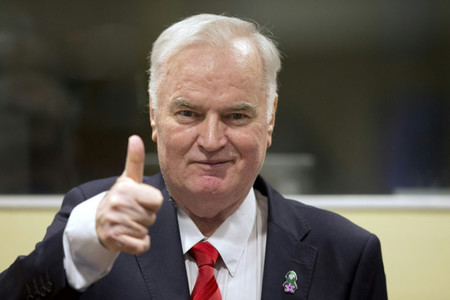
The Bosnian Serb wartime political leader Radovan Karadzic and his military commander Ratko Mladic were both convicted of genocide in Srebrenica by a special UN war crimes tribunal in The Hague. In all, the tribunal and courts in the Balkans have sentenced close to 50 Bosnian Serb wartime officials to more than 700 years in prison for the Srebrenica killings.
However, most Serbian and Bosnian Serbs officials still celebrate Karadzic and Mladic as national heroes. In fact, Bosnian Serb political leaders have consistently prevented the country from adopting a law that would ban genocide denial, as well as one declaring July 11 a national day of mourning.
On the eve of the 26th massacre anniversary, the Serb member of Bosnia’s presidency, Milorad Dodik, once again denied that what happened in Srebrenica in 1995 was a genocide, telling a local newspaper that the mourners are burying empty coffins.
The statement was considered particularly vile because families of the massacre victims were burying just a handful of bones, as the remains of their loved ones are typically found scattered over several different mass graves, sometimes miles apart, since Bosnian Serb forces tried to cover-up their crimes.
Published in Dawn, July 12th, 2021