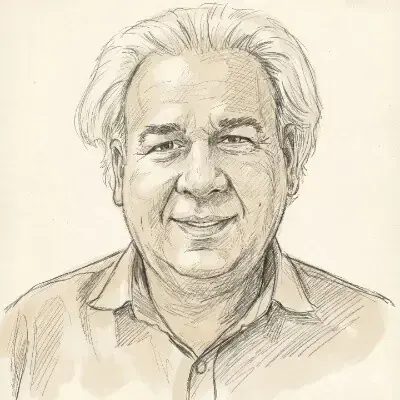
KARACHI: As part of its fortnightly webinar series, Habib University held a talk by Dr Dard Neuman on ‘Heterodoxy and the Politics of the Popular in Post-1857 Hindustani music’.
Dr Neuman, who is associate professor of music, chair of music department, Hasan Endowed Chair in classical Indian music, at the University of California Santa Cruz, said his talk was part of his recent effort to examine a shift in the relationship between music and power, in Hindustani music from elite Indo-Persian models to popular Sufi and Bhakti models.
He argued after 1857, elite Muslim culture became radically disruptive. In those conditions a new class of hereditary musicians emerged to redefine the performance practice of what has now come to be called Indian classical music. Ideologically some of those musicians through heterodox Sufi and Bhakti critiques of hierarchy celebrated the marginal.
Musically, these practitioners synthesised popular and elite performance practices. These efforts helped forge a fundamentally new socio-musical aesthetic, one that opened access to women and non-elite lineages, and as such represented a type of indigenous modernity formed in but not defined by colonial conditions.
Dr Neuman said extraordinary socio-musical invasions took place among these non-elite marginalised musicians, who synthesised the anti-hierarchical spiritualities with elite Shastric and Indo-Persian classical precepts, not to reinforce hierarchies but to democratise the propagation of music.
After 1857, a new class of hereditary musicians emerged to redefine the performance practice now called Indian classical music
Shastric treatise
Among these precepts was a series of permutations and combinations framed in the 13th century Shastric treatise. The framework allowed musicians to explore mathematical combinations of notes available in an aesthetic field known as raag; and with this innovation musical learning was no longer solely dependent on the inherited repertoires of oral compositions.
He said the integration of three data types — observational, behavioural and anecdotal — demonstrated how the performance practice in the 20th century was produced by the musicians who were excluded from traditional definitions of the classical and colonial conditions.
In order to appreciate the Sufi-Bhakti ideological component of the subject, the scholar gave by showing an image a reductive framework that revolved around the relationship between music and the politics of spirituality.
“Music in South Asia is inextricably linked to the spiritual. What is less discussed, however, are the political dimensions of these spiritual traditions, specifically how some contest while others reinforce political and social hierarchies,” he said.
He then posited as a framework of transcultural traditions along two intersecting continuums. On the X-axis there’s the popular and elite traditions while on the Y-axis there’s the worldly political and the worldly renouncing traditions. In each of them music plays a central role in the politics of spirituality. On the popular side music worked by virtue of the sacred to excite ecstatic responses, on the elite side music worked to control and discipline.
Dr Neuman said the modern history of Hindustani music involves an active synthesis of those different traditions. A process of hybridity that began in the mid 18th century and intensified as Mughal rule ended.
Talking about a ‘familiar’ figure of Swami Haridas in music, he said his was the spiritualism that separated from the political and the material. Those involved in the world of Hindustani music are well acquainted with the story of Swami Haridas’s famous disciple Tansen, the court musician of Emperor Akbar.
The swami sang with such an impact that it brought the emperor into an ecstatic response. When Akbar asked Tansen why his music lacked such power, he responded that he sang before the emperor, his teacher, Swami Haridas, sang before the divine.
Dr Neuman, after that, spoke on other facets of the topic such as categories of musicians, including those who had a nonconformist attitude to authority.
Dr Nauman Naqvi and Sajjad Rizvi, both associate professors at Habib University, were the discussants.
Published in Dawn, June 26th, 2021