Germany admits to Namibia genocide, but critics want more


BERLIN: Germany on Friday recognised it had committed genocide in colonial-era Namibia and promised a billion euros in financial support to descendants of the victims, in a move welcomed as a “first step” by Namibia but slammed as insufficient by activists.
“We will now officially refer to these events as what they are from today’s perspective: genocide,” said Foreign Minister Heiko Maas.
“In light of the historical and moral responsibility of Germany, we will ask forgiveness from Namibia and the victims’ descendants” for the atrocities committed, he added.
The agreement came after more than five years of negotiations between the two countries over events in the territory held by Berlin from 1884 to 1915.
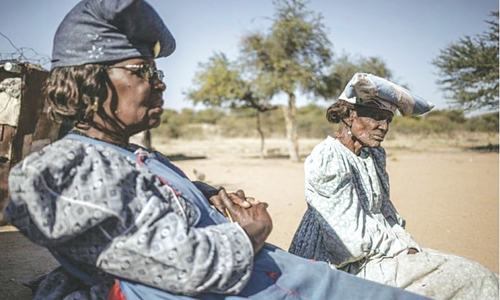
German colonial settlers killed tens of thousands of indigenous Herero and Nama people in 1904-1908 massacres — labelled the first genocide of the 20th century by historians and poisoning relations between Namibia and Germany for years.
In a “gesture to recognise the immense suffering inflicted on the victims”, Germany will support the “reconstruction and the development” of Namibia via a financial programme of 1.1 billion euros ($1.34 billion), Maas said.
The sum will be paid over 30 years, according to sources close to the negotiations, and must primarily benefit the descendants of the Herero and Nama.
Yet Maas stopped short of referring to reparations, saying the payment did not open the way to any “legal request for compensation”.
“The acceptance on the part of Germany that a genocide was committed is the first step in the right direction,” Namibian President Hage Geingob’s spokesman Alfredo Hengari said.
“It is the basis for the second step, which is an apology, to be followed by reparations,” he added.
Activist groups in both countries also criticised the lack of direct reparations, with the German-based initiative “Berlin Postkolonial” saying it was “doomed to fail” and “not worth the paper it is written on”.
The group, which is set to hold a protest in the German capital, said the Herero and Nama communities had not been consulted sufficiently in the negotiations.
In Namibia, a Herero leader accused the government of being strong-armed into the accord.
“We will not accept any outcome between these two governments,” Mutjinde Katjiua, secretary general of the Ovaherero Traditional Authority, said.
Namibia was called German South West Africa during Berlin’s 1884-1915 rule, and then fell under South African sway for 75 years, before finally gaining independence in 1990.
Tensions boiled over in 1904 when the Herero — deprived of their livestock and land — rose up, followed shortly after by the Nama, in an insurrection crushed by German imperial troops.
In the Battle of Waterberg in August 1904, around 80,000 Herero, including women and children, fled and were pursued by German troops across what is now known as the Kalahari Desert. Only 15,000 survived.
German General Lothar von Trotha, sent to put down the rebellion, ordered the peoples’ extermination.
At least 60,000 Herero and around 10,000 Nama were killed between 1904 and 1908. Colonial soldiers carried out mass executions and forced men, women and children to flee to the desert where thousands died of thirst.
They also established infamous concentration camps, such as the one on Shark Island.
Negotiations over an apology began in 2015, and in 2018 Germany returned the bones of members of the Herero and Nama tribes, with the minister for international cultural policy Michelle Muentefering asking for “forgiveness from the bottom of my heart”.
Published in Dawn, May 29th, 2021