IHC asks officials to curb bonded labour in Islamabad


 1
1


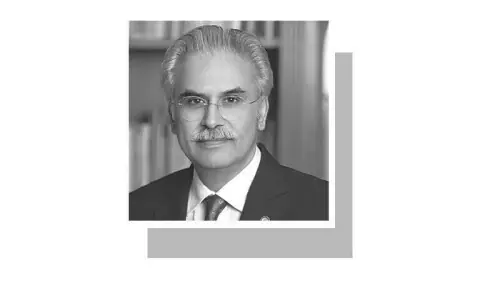
ISLAMABAD: Terming bonded labour modern day slavery, the chief justice of the Islamabad High Court asked the interior secretary, the chief commissioner and the inspector general police of Islamabad to take measures to curb the menace or face consequences.
Chief Justice Athar Minallah was conducting the hearing on a petition filed by a concerned citizen about captivity of juvenile bonded labourers on Wednesday.
Labour Officer Ghani Mohammad appeared before the court and Justice Minallah asked him what action had so far been taken to put an end to the menace of bonded labour within Islamabad Capital Territory. He replied that labour officials had been visiting brick kilns to ensure that labour laws were implemented there, but his reply failed to satisfy the court.
Justice Minallah noted that “public functionaries do not seem to be taking the matter as a priority…[as] the plight of the labour(ers) who are exposed to the intolerable practice of ‘Advance (Peshgi) system’ is a reality and adequate action has not been taken so far to put an end to it”.
“From today’s proceedings it has transpired that the practice of bonded labour is not only prevalent but the state functionaries have failed to fulfill their constitutional obligations to put an end to it,” observed Justice Minallah.
Advocate Khurram M. Hashmi appeared on behalf of some of the owners of brick kilns established within the federal capital.
He referred to the Punjab Prohibition of Child Labour at Brick Kilns Act, 2016, in support of his contention that in the province legal cover had been provided to ‘advance’ (Peshgi) system’.
Admittedly, the said statute had not been extended and was thus not enforced within the area of the Islamabad Capital Territory, Justice Minallah noted, adding that a reading of the said Act prima facie showed that it might be in breach of the principles and law highlighted by the Supreme Court.
He said that no law could be enacted in violation of the fundamental rights guaranteed under the Constitution nor the abhorrent practice of bonded labour could be provided legal cover in any form whatsoever.
The ‘advance payment (Peshgi) system’ was definitely a form of slavery and thus unconstitutional, the chief justice declared.
Published in Dawn, April 22nd, 2021