India’s court paves way for Rohingya deportation

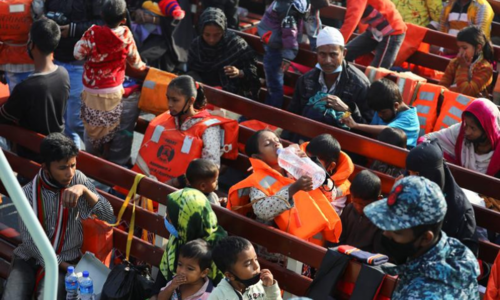
NEW DELHI: India’s Supreme Court rejected a plea on Thursday to stop the government from deporting to Myanmar some 150 Rohingya Muslims police detained last month, paving the way for them to be sent to a country where hundreds have been killed following a military coup.
Prime Minister Narendra Modi’s government has been trying to send back Rohingyas, a Muslim minority from Myanmar who have found refuge in India after fleeing persecution and waves of violence over the years.
Two refugees petitioned the Supreme Court for the release of Rohingya men and women detained in India-occupied Jammu last month, and block the government from deporting them.
But Chief Justice Sharad Arvind Bobde said the deportation could go ahead as long as officials followed due process. “It is not possible to grant the interim relief prayed for,” the judge said in his order.
“Regarding the contention raised on behalf of the petitioners about the present state of affairs in Myanmar, we have to state that we cannot comment upon something happening in another country,” he added.
Hundreds of people have been killed in Myanmar since the army seized power in a coup on Feb 1.
The ruling triggered panic among refugees in India, a Rohingya community leader in New Delhi said.
“This is a terrifying order made by the highest court in India,” he said. “Given the horrifying situation in Myanmar, I had really hoped the judge would rule in our favour.”
The Modi government says the Rohingya are in the country illegally and a security threat. A total of 12 Rohingya have been deported since 2017, according to community leaders.
Last week, officials tried deporting a 16-year-old Rohingya girl to Myanmar and drove her to the border, but that attempt failed as authorities in Myanmar were not reachable.
Many of the Rohingya in India carry identity cards issued by the United Nations refugee agency (UNHCR) recognising them as refugees, but the country is not a signatory to the UN Refugee Convention. India also rejects a UN position that deporting the Rohingya violates the principle of refoulement _ forcible return of refugees to a country where they face danger.
Thursday’s order shows a “blatant disregard” for that principle, said Fazal Abdali, a lawyer involved in Rohingya deportation cases.
“It sends a message that India is no longer a refuge for persecuted minorities,” Abdali said.
Published in Dawn, April 9th, 2021