Merkel ally wins race to lead her party


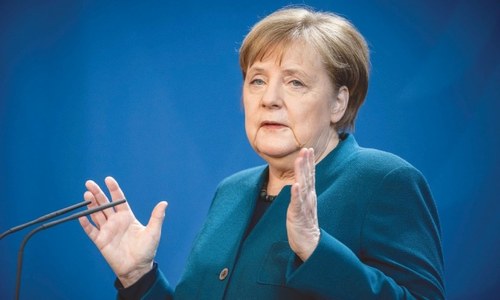
German Chancellor Angela Merkel's conservative CDU party on Saturday picked her ally Armin Laschet as its next leader, in a vote that kicks off the race for the country's top job as a deadly pandemic roils Europe's biggest economy.
In the close race, Laschet, the state premier of Germany's most populous state, North Rhine-Westphalia, triumphed over old Merkel nemesis Friedrich Merz, after a first round that saw Merz leading by just five votes.
A third hopeful, foreign affairs expert Norbert Roettgen, was knocked out of the race.
Merz had campaigned on a promise to shift away from Merkel's centrist path and steer right, writing in a column for Der Spiegel that a “happy 'carry on like this' is just as inappropriate as the vague claim to occupy the centre at all times”.
In contrast, Laschet pledged to continue with Merkel's more moderate course.
In a speech minutes before the vote on Saturday, Laschet called for “continuity” and highlighted the challenge of retaining CDU voters without Merkel at the top.
“What we need is continuity of success,” he said, in a direct rejection of Merz's vision.
Merz, meanwhile, attempted to address his low levels of support among women in the party by highlighting his good relationship with his wife and daughter — leading to some panning on social media.
“Sure, every heterosexual husband and father is virtually a women's rights movement in their own right,” one Twitter user wrote.
At the opening on Friday of the two-day congress which had been forced online by the pandemic, Merkel had signalled her opposition of Merz as she urged delegates to stay the centrist course.
“As a people's party of the centre, we naturally seek solutions that balance out conflicts and always promote [...] social cohesion,” she said.
“This has always distinguished us as a governing party,” added Merkel.
Merkel backs 'team'
Giving a further hint of her choice, Merkel said she hoped that “a team will be elected that will take the fate of our proud party in its hands”.
While she did not name names, the call appeared to indicate support for Laschet, who has campaigned on a joint ticket with Health Minister Jens Spahn as his deputy.
Merkel had previously said that Laschet “has the tools” to be chancellor.
Merkel, 66, elected as Germany's youngest and first female chancellor in 2005, is planning to stand down after four terms and 16 years in the job following a general election in September.
She had already given up the party's chairman job in 2018 but her preferred successor Annegret Kramp-Karrenbauer was forced to step down over her handling of a regional election scandal.
The head of the CDU traditionally leads the party and its Bavarian sister party CSU into a general election as its chancellor candidate, meaning Laschet, would be in with a good chance of securing the top job.
But the pandemic has reshuffled the cards, and many voices are calling instead for the conservative alliance to field someone else as its chancellor candidate.
Chancellor candidate
Most popular at the moment is CSU leader and Bavarian state premier Markus Soeder, whose robust response to the pandemic has won him widespread praise and given him a national spotlight.
Another contender could be Spahn, who has reportedly been sounding out his chances behind the scenes.
The final race at Merkel's conservative alliance for Germany's top job is therefore far from over ahead of the September 26 elections.
Merkel helped Germany weather storms including the global financial crisis and eurozone turmoil as she shifted her CDU firmly to the political centre.
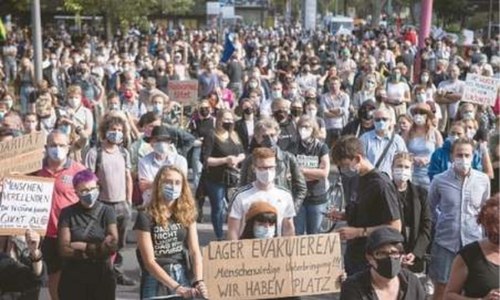
Support for the chancellor plummeted after Germany kept open its borders in 2015 to a mass influx of refugees, dividing society and leading to the rise of the far right.
But in the twilight of her reign, Merkel's popularity has soared again thanks to her handling of the coronavirus pandemic, making it increasingly difficult for Germans to imagine political life without her.