Inflation eases to 8pc


 0
0
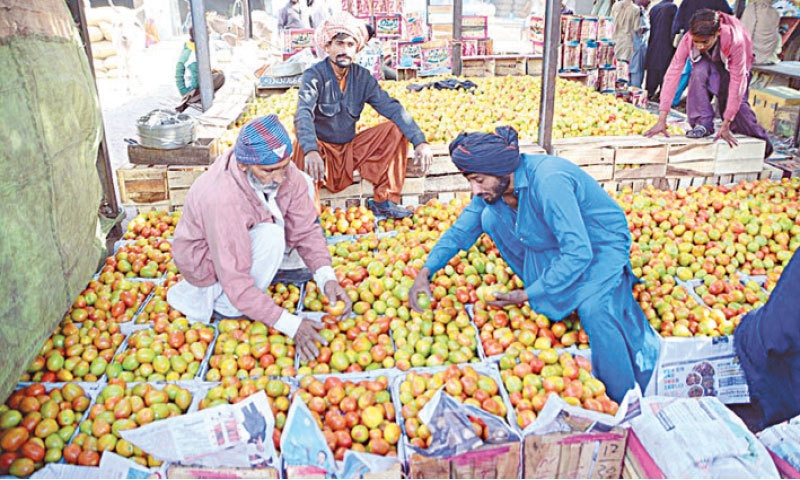

ISLAMABAD: December saw a slight deceleration in consumer product prices as inflation eased to eight per cent from 8.3pc in November, data released by the Pakistan Bureau of Statistics (PBS) showed on Friday.
Inflation has been on a downward trajectory since September owing to improvement in supply dynamics and a slight fall in prices of essential kitchen items. However, prices of some food items are still on an upward trajectory.
The average CPI during the July-December period eased to 8.63pc compared to 11.11pc during the same period last year. The average CPI in FY20 rose to 10.74pc, from 6.8pc in the year before — highest since 2011-12 when it stood at 11.01pc.
Despite a slight decline in overall figures, food inflation during the month saw double-digit growth as consumer item prices remained on a higher side.
Higher food prices continued to exert upward pressure on inflation as prices of food group rose 12.6pc year-on-year and dipped 2.1pc month-on-month in December in urban areas. The situation is worse in rural areas where prices of food group rose 13.4pc YoY and a drop of 3.4pc MoM in December.
The decline indicates that prices of essential food items are likely to decline in the next month as well.
Prices of essential food items — tomatoes, onions, potatoes, chicken, eggs, sugar and wheat — have seen a consistent increase over the last few months. Having a maximum share in the food basket, a slight increase in kitchen items raises overall inflation.
In December, wheat prices went up by 24.15pc year-on-year, wheat flour 13.45pc, chicken 67.35pc, eggs 64.39pc, rice 6.69pc, and sugar 15.32pc. The government has imported wheat and sugar to bridge shortfalls and improve its supplies in the market. With the arrival of tomatoes and onions in the domestic market, the prices of these items declined during the month under review.
Pakistan’s wheat imports stood at 1.585 million metric tonnes during July-November period compared to zero import in the same period last year. Similarly, sugar imports stood at 253,405 metric tonnes during the period under review as against 2,736 metric tonnes last year.
With shortages in domestic production, inflation in July stood at 9.3pc before easing down to 8.2pc in August but again increased to 9pc in September.
In urban areas, food items that saw a jump in prices during the month under review included eggs, up 15.67pc, spices 6.88pc, butter 6.75pc, dry fruits 4.57pc, vegetable ghee 3.07pc, cooking oil 2.2pc and fish 1.51pc.
The items whose prices fell in urban areas were onions, down 29.12pc, tomatoes 27.12pc, vegetables 19.18pc, sugar 18.07pc, potatoes 13.12pc, wheat 4pc, fruits 1.85pc and pulse gram 1.23pc.
In rural areas, egg prices rose by 14.08pc, spices 4.19pc, cooking oil 3.71pc, chicken 3.21pc, vegetable ghee 3.13pc, mustard oil 2.63pc, fish 2.47pc, pulse mash 2.01pc and dry fruits 1.95pc.
On the other hand, drag on price levels came from onions 31.45pc, sugar 23.04pc, tomatoes 19.82pc, vegetables 18.15pc, potatoes 16.61pc, wheat 3.91pc, wheat flour 3.53pc and fruits 1.49pc.
Meanwhile, non-food inflation in urban centres was recorded at 3.8pc YoY and 0.7pc MoM, whereas in rural areas, it rose by 6.1pc and 1pc respectively. The slight increase in non-food inflation is because of a slight increase in fuel prices.
The urban consumer price index covers 35 cities and 356 items, while the rural one tracks 27 centres and 244 products. The former grew by 7pc YoY in December whereas the latter jumped by 9.5pc.
Core inflation in urban areas remained unchanged at 5.6pc in December in comparison to November figures. In rural areas, the corresponding increased to 7.7pc from 7.4pc.
The central bank determines the key policy rate, currently at 7pc, based on the core inflation rate. The State Bank of Pakistan has reduced the rate by a cumulative 625 basis points since March, 2020 to combat uncertainty amid the coronavirus pandemic.
Average inflation measured by the sensitive price index eased to 9.1pc during December from 9.9pc during the previous month, while the wholesale price index was slightly up from previous month’s 5pc to 5.7pc in December.
Published in Dawn, January 2nd, 2021