Israel, Morocco agree to normalise relations in latest US-brokered deal



Israel and Morocco agreed on Thursday to normalise relations in a deal brokered with the help of the United States, making Morocco the fourth Arab country to set aside hostilities with Israel in the past four months.
As part of the agreement, US President Donald Trump agreed to recognise Morocco's sovereignty over the Western Sahara, where there has been a decades-old territorial dispute with Morocco pitted against the Algeria-backed Polisario Front, a breakaway movement that seeks to establish an independent state in the territory.
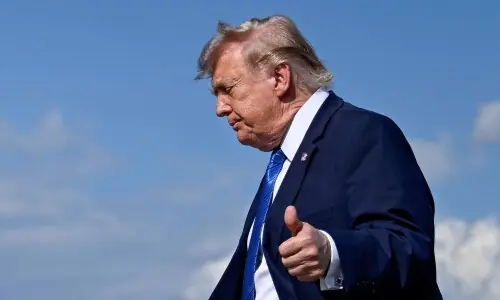
Trump sealed the agreement in a phone call on Thursday with Morocco's King Mohammed VI, a senior US official said.
Morocco is the fourth country since August to strike a deal aimed at normalising relations with Israel. The others were the United Arab Emirates, Bahrain and Sudan.
Under the agreement, Morocco will establish full diplomatic relations and resume official contacts with Israel, grant overflights and also direct flights to and from Israel for all Israelis.
“They are going reopen their liaison offices in Rabat and Tel Aviv immediately with the intention to open embassies. And they are going to promote economic cooperation between Israeli and Moroccan companies,” White House senior adviser Jared Kushner told Reuters.
“Today the administration has achieved another historic milestone. US President Trump has brokered a peace agreement between Morocco and Israel — the fourth such agreement between Israel and an Arab/Muslim nation in four months.
“Through this historic step, Morocco is building on its longstanding bond with the Moroccan Jewish community living in Morocco and throughout the world, including in Israel. This is a significant step forward for the people of Israel and Morocco.
“It further enhances Israel's security, while creating opportunities for Morocco and Israel to deepen their economic ties and improve the lives of their people.”
A White House statement on the phone call between Trump and the king of Morocco said Trump “reaffirmed his support for Morocco's serious, credible, and realistic autonomy proposal as the only basis for a just and lasting solution to the dispute over the Western Sahara territory”.
“And as such the president recognised Moroccan sovereignty over the entire Western Sahara territory,” the statement said.
Palestinians have been critical of the normalisation deals, saying Arab countries have set back the cause of peace by abandoning a longstanding demand that Israel give up land for a Palestinian state before it can receive recognition.
With Trump to leave office on January 20, the Morocco deal could be among the last his team, led by Kushner and US envoy Avi Berkowitz, is able to negotiate before they give way to President-elect Joe Biden's incoming administration.
Much of the momentum behind the deal-making has been to present a united front against Iran and roll back its regional influence.
The Trump White House has tried to get Saudi Arabia to sign on to a normalisation deal with Israel, believing if the Saudis agreed other Arab nations would follow, but the Saudis have signaled they are not ready.
One more Middle East breakthrough is possible.
Last week Kushner and his team traveled to Saudi Arabia and Qatar seeking an end to a three-year rift between Doha and the Gulf Cooperation Council countries.
A tentative deal has been reached on this front but it was far from clear whether a final agreement to end a blockade of Qatar will be sealed.
Saudi Arabia, the United Arab Emirates, Bahrain and Egypt have maintained a diplomatic, trade and travel embargo on Qatar since mid-2017.
While Biden is expected to move US foreign policy away from Trump's “America First” posture, he has indicated he will continue the pursuit of what Trump calls “the Abraham Accords” between Israel and Arab and Muslim nations.