0
0

KARACHI: The Commonwealth Journalists Association (CJA) has welcomed the report of the Independent High-Level Panel of Legal Experts (IHLPLE) on media freedom published on Monday and urged the Commonwealth governments to implement its recommendations to provide safe refuge to journalists at risk.
Endorsing the report, CJA president Mahendra Ved said: “This is a timely report which offers some very practical solutions to the dilemmas faced by a large number of journalists in today’s world who are increasingly under threat from state and non-state actors and in fear of their lives for just doing their job.”
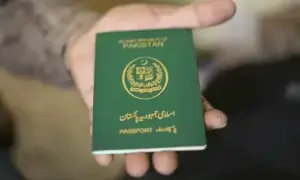
According to a press release, the report’s nine recommendations, which are addressed to states worldwide, include the introduction of an emergency visa for journalists at risk and their immediate families and the issuing of travel documents to the relocated journalists if their passports are revoked or cancelled by their home countries.
Another recommendation is that states should legally recognise journalists at risk as refugees under the terms of the international Refugee Convention and that they should be permitted to apply for refugee status from within their home countries, something which is not currently possible.
The report further recommends that Interpol should require states to specify whether the subject of a Red Notice, seeking extradition, is a journalist in order to guard against the victimisation of journalists who have been given refuge abroad.
The 121-page report authored by Can Yeginsu, a member of the panel, looks in great detail at existing pathways which journalists at risk can pursue in their efforts to gain safe refuge abroad and concludes that none of them provides a speedy remedy for the immediate dangers they face.
The report provides graphic details of increasing pressures on journalists in many countries.
Between 2010 and 2015, over 450 journalists were forced into exile under threats of imprisonment or violence. The number of journalists being detained is rising annually and stood at 389 last year according to the Reporters Without Borders organisation. The number of missing — 65 in 2018 according to the Committee to Protect Journalists — has also nearly doubled in a decade. The report provides 15 individual case studies, three of them from the Commonwealth — from Bangladesh and Pakistan — which illustrate these pressures and the inadequacy of current legal pathways in many countries.
This is the third report of the Independent High-Level Legal Panel set up in 2019 and backed by the Media Freedom Coalition established last year’s international conference in London hosted by the UK and Canadian governments. So far, 40 governments have joined the coalition and signed the Global Pledge on Media Freedom, though only six are from the Commonwealth. These are Botswana, Canada, Ghana, Maldives, Seychelles and the UK.
A final recommendation of the report is that among these countries, regional champions should be appointed for two-year terms to ‘spearhead the provision of safe refuge for journalists at risk’.
Published in Dawn, November 24th, 2020