3
3

IN a democracy, parliament is responsible for the key functions of scrutiny, legislation and debate. Yet, in the current environment, our National Assembly sessions have been dominated by name-calling, unsavoury speeches and obnoxious behaviour.
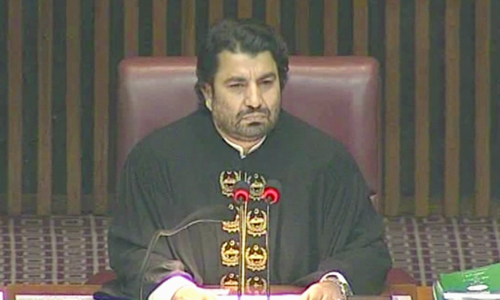
In this week’s episode of what can be dubbed ‘the chronicles of chaos’, the chair of the lower house surprised everyone by ordering the ejection of a protesting MNA. In a dramatic scene, the speaker instructed the sergeant-at-arms to escort a PPP lawmaker out of the house, after he loudly protested that his question regarding the tax returns of the prime minister’s advisers had been ignored.
Although a senior PPP MNA tried to pacify the deputy speaker by tendering an apology and asked the chair to withdraw his ruling, Mr Qasim Khan Suri insisted he would allow the lawmaker to sit in the house only if he exited the premises first and returned with his permission.
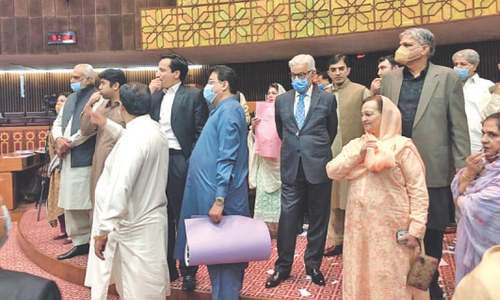
Similar scenes of utter pandemonium have sadly become a defining feature of the proceedings of the National Assembly. Instead of performing their functions of scrutiny, legislative business and debate for the public good, sessions have been reduced to shouting matches with no regard for the sanctity of the house.
If one were to examine the rules governing parliamentary procedure, it would be amply clear that MNAs belonging to both the treasury and opposition benches violate nearly every point relating to decorum. But though the blame must be apportioned to both, the responsibility of bringing effective legislation lies primarily with the government — and on this count, it has failed miserably.
Its relationship with the opposition members is so toxic that it is near impossible to engage in any constructive debate both inside and outside the Assembly. While both sides should exhibit higher levels of courtesy and fight the tendency to shout each other down, it is the government that must provide an environment conducive to vigorous, healthy debate to enable sound legislation. Instead, all too often unhealthy politics has seen the government bypass parliament in legislative matters through ordinances — a dangerous trend that undermines democratic values as the arbitrary decrees seek to circumvent parliamentary opposition to government policy.
The government should show maturity and rethink its approach on engagement, or it will continue to rely on questionable means of lawmaking. This will dilute the democratic character of the Constitution by taking the power of legislation away from the people.
Published in Dawn, October 30th, 2020