Five sentenced to death in Bangladesh for gang-rape


DHAKA: A Bangladesh court sentenced five men to death on Thursday for the 2012 gang-rape of a 15-year-old girl, amid growing public anger over rampant sexual violence.
The sentence was handed down in the northern district of Tangail by a special tribunal set up to deal with cases of abuse against women and children.
Prosecutor Nasim Ahmed said the victim’s boyfriend took her to a riverside where she was raped by him and two friends. Two others helped them.
“All five were found guilty and have been sentenced to death,” Ahmed said.
It was the first conviction since the government of Prime Minister Sheikh Hasina this week introduced the death penalty for rape.
Gang-rape already carried the death sentence, but rape by a single offender had previously been punishable only by life imprisonment.
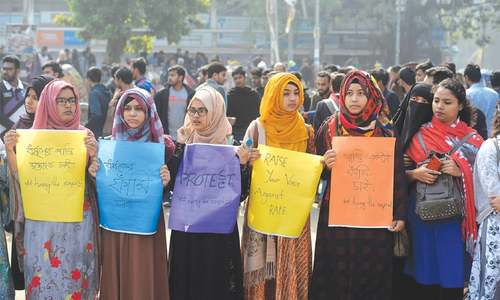
Last week demonstrations broke out across the country after harrowing footage of a group of men stripping and attacking a woman went viral on social media.
National anger over the issue has been simmering since last month, when members of the ruling party’s student wing were arrested and charged in a separate gang-rape case.
Protesters in the capital and elsewhere have demanded stiffer punishments, faster trials and an end to what they see as a culture of impunity for sex crimes.
Only around three per cent of rape cases end in convictions.
At least 208 cases of gang-rape were reported in the first nine months of this year, according to Ain o Salish Kendra, a local rights group.
Bangladesh has hanged 23 people since 2013, while at least another 1,718 are on death row.
Rights activists have criticised the introduction of the death sentence for rape, saying it will not reduce violence against women.
“This regressive step is a fig leaf that deflects attention from the lack of real action to address the appalling brutality faced by so many Bangladeshi women,” Amnesty International said.
“Executions perpetuate violence, they don’t prevent it,” he said.
Published in Dawn, October 16th, 2020