Fire at migrant camp in Greece leaves thousands homeless


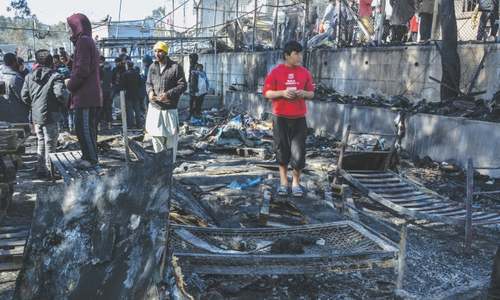
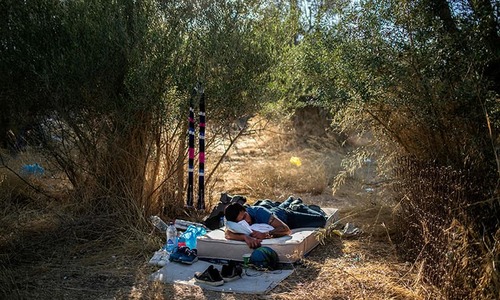
LESBOS ISLAND: Thousands of asylum seekers were left homeless on Wednesday after a fire gutted Greece’s largest migrant camp on Lesbos, plunging the island into crisis and sparking pledges of help from around Europe.
The blaze, which began hours after 35 people tested positive for coronavirus at the Moria camp, sent thousands fleeing for safety into surrounding olive groves — but nobody was seriously hurt.
Greek Prime Minister Kyriakos Mitsotakis blamed the blaze on a “violent reaction” to the virus tests, echoing an earlier report saying several fires had been lit deliberately by migrants angry at being placed into isolation after testing positive.
The EU promised to pay for 400 unaccompanied youngsters to be transported to the mainland and Germany called for EU countries to ramp up support.
EU chief Ursula von der Leyen said she was “deeply sorrowed” by the fire at the camp, which was built to house fewer than 2,800 people but routinely hosts many times that number.
“Our priority is the safety of those left without shelter,” said the European Commission president.
German Foreign Minister Heiko Maas, whose country holds the presidency of the bloc, said he wanted EU counterparts to assess how they could help — including by taking in refugees.
Norway has already offered to take 50 Syrians from Moria even though Greece has currently banned the camp’s former residents from leaving the island.
An exception will be made for the 400 minors to be taken to the mainland, a migration ministry source told state agency ANA.
Most of the refugees and migrants were sitting on the roadside between the camp and the port of Mytilene on Wednesday, forming long queues.
“What are we going to do now? Where can we go?” said Mahmout, an Afghan, as his compatriot Aisha searched for two of her children.
“Two of my children are there, but I don’t know where the others are,” she said.
Published in Dawn, September 10th, 2020