BEIRUT: Lebanon’s under-fire leaders on Monday designated a new prime minister, diplomat Mustapha Adib, to tackle the country’s deep political and economic crisis, hours before French President Emmanuel Macron was due to visit.
Mustapha Adib, 48, Lebanon’s former envoy to Germany, gave a televised speech acknowledging the “need to form a government in record time and to begin implementing reforms immediately”.
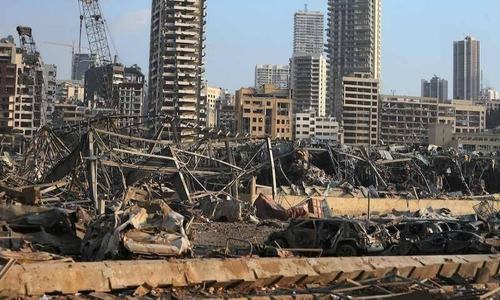
He vowed to resume talks with the International Monetary Fund for assistance as Lebanon faces its worst economic crisis since the 1975-1990 civil war and was traumatised by Beirut’s deadly August 4 explosion.
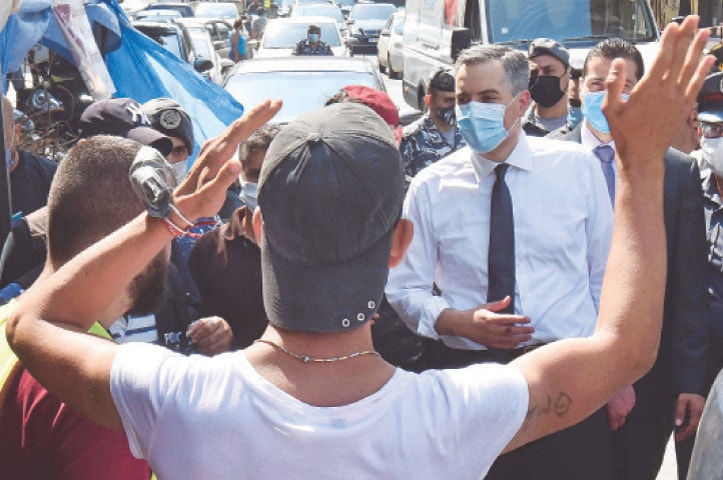
“I want your trust,” a correspondent heard him tell a resident of Beirut’s badly-hit Gemmayzeh neighbourhood during a tour of the area devastated by the massive blast which rocked the city and further shook confidence in the political class.
Macron, who had toured the area two days after the disaster, was due to return later on Tuesday and was expected to renew his calls for a radical overhaul of the country’s complex, sectarian political system.
Macron had demanded “deep change” and warned then he would check on progress when he returned for the Sept 1 centenary of Greater Lebanon, expected to be a glum commemoration.
On the eve of the event, many citizens were planning to leave the country and asked whether Lebanon would live to be 101.
President Michel Aoun and his political ally, Hezbollah leader Hassan Nasrallah, on Sunday both expressed willingness to change the way Lebanon is governed.
The 85-year-old Aoun, a hate figure to Lebanon’s large protest camp which regards him as deaf to calls for change, even urged the proclamation of a secular state.
Under Lebanon’s political system, the premier must be a Sunni, the presidency is reserved for a Maronite Christian and the post of parliamentary speaker goes to a Shia.
Speaker Nabih Berri, also reviled by demonstrators, followed suit on Monday by urging change to the country’s confessional political system, which he labelled “the cause of all ills”.
Suspicion was rife that Lebanon’s long-serving political heavyweights were only paying lip service to reform ahead of Macron’s visit.
“When the political class talks about the introduction of the civil state, it reminds me of the devil talking about virtue, it doesn’t make sense,” said Hilal Khashan, a political science professor at the American University of Beirut.
“There is a big difference between raising a slogan and really putting it to work.” Adib’s designation “will not usher in a new period in Lebanese history and I don’t think it will put Lebanon on the road of genuine political development”.
The IMF in a statement on Monday voiced “hope that a new government will be formed shortly with a mandate to implement the policies and reforms that Lebanon needs to address the current crisis.”
Adib emerged as a consensus option on Sunday and was named premier the next day in a statement by the presidency.
The close aide to former prime minister Najib Mikati received backing from the country’s top political parties.
Lebanon’s last government, headed by Hassan Diab, resigned after the massive explosion, which revived calls at home and abroad for radical revamp of the state.
Published in Dawn, September 1st, 2020