Kabul police chief sacked after surge in attacks


 1
1


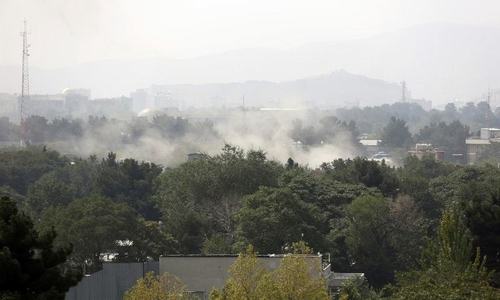
KABUL: Kabul’s police chief has been fired, the Afghan interior ministry said on Sunday, following a mortar attack that hit the presidential palace last week and an uptick in small-scale bombings in the nation’s capital.
Interior ministry spokesman Tareq Arian said that authorities dismissed Ammanullah Wahidi — who oversaw security in Kabul and surrounding districts — and at least two other mid-ranking security officials over “the recent rise in insecurity” in the capital.
Another top security official confirmed Wahidi’s removal.
“The people are worried and the president is upset over these attacks,” the official said on the condition of anonymity. “There will be more changes in the security leadership of Kabul soon.”
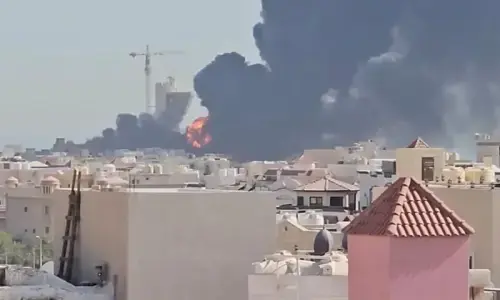
During Independence Day celebrations on Tuesday, at least three people were killed and 19 injured after more than a dozen mortars were fired at the city’s heavily fortified green zone, home to a number of foreign embassies along with high-profile government installations.
The palace was hit, and several members of the president’s elite security detail were among the injured.
During independence day celebrations three people were killed and 19 injured after many mortars were fired at the capital’s heavily fortified green zone
The attack came as the city has been rocked by a series of attacks using sticky bombs — homemade devices attached to vehicles with magnets that are regularly used to target security forces.
On Saturday, officials said at least four magnetic bombs had exploded in the city, killing at least one security official and wounding six others, including civilians.
No group has claimed responsibility for the increasing number of blasts in the capital caused by the devices, but the interior ministry has continued to pin the blame on the Taliban.
Arian, the interior ministry spokesman, said more than 100 improvised explosive devices (IEDs), including sticky bombs, had been detonated across Afghanistan in the past two weeks.
On Sunday, at least seven civilians were killed in eastern Ghazni province after an IED struck their vehicle, according to the governor’s spokesman Wahedullah Jumazada.
A Taliban spokesman was not immediately available for comment.
Published in Dawn, August 24th, 2020