Provinces asked to contain expenditures

ISLAMABAD: The federal government on Thursday asked provinces to limit their expenditures during the current fiscal year on the basis of expected revenue collection of about Rs4.6 trillion by the Federal Board of Revenue (FBR) instead of Rs4.96tr budget target.
A senior finance ministry official said the provinces had been advised to remain frugal in their expenditures given the uncertainties regarding economic recovery that may hamper the ability of the FBR to achieve its budgeted target.
He said the provinces had also been asked to keep in mind providing at least Rs240 billion cash surplus to the centre on top of containing their expenditure projections within the Rs4.6tr federal divisible pool of taxes.
The official further said there had been a lot of talk by the provinces that their budgets had been adversely affected due to major slippages by the FBR to achieve even its revised revenue target of Rs5.23tr. Last year, the FBR finally collected Rs3.95tr against original target of Rs5.55tr, leaving a shortfall of almost Rs1.6tr.
The provinces were thus compelled to cut their development budgets drastically besides resorting to slashing other expenditure. Under the existing National Finance Commission (NFC) arrangement, the federal government has to transfer about 60pc of the total resources to provinces including 57pc NFC share and special transfers for security expenses and protection to Balochistan.
The sources said the government had set the revenue target for FY20-21 at Rs4.963tr for the International Monetary Fund (IMF) programme to get back on track but wanted to remain realistic in its own expenditures and manage expectations of the provinces in view of the uncertainties about economic recovery. Also, the government did not announce a lower revenue number to ensure the tax machinery remained committed to maximum tax recovery.
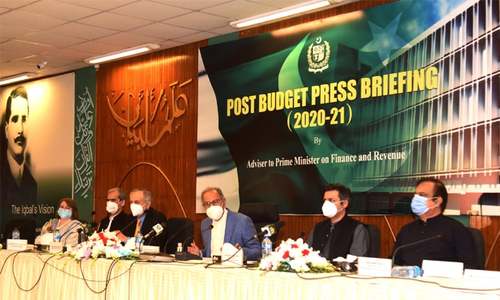
Following the announcement of federal budget, Adviser to PM on Finance and Revenue Dr Abdul Hafeez Shaikh had warned the provinces to formulate their budgets based on their own best assessments taking into account the FBR’s past performance while highlighting the uncertainty of the federal budget and economic conditions ahead.
“This is not a divine revelation and is subject to adjustment if God forbid its (pandemic) severity increases or prolongs”, he had said at a press conference.
The FBR seldom achieves its tax targets and the trade body’s collection has actually fallen over the last two years. Since more than 57.7pc of total federal taxes are meant for the provinces under the NFC, they end up incurring higher expenditures but have to face fiscal problems later as revenue targets fail.
The finance ministry believed that the international institutions — IMF, Asian Development Bank, World Bank, Islamic Development Bank and Asian Infrastructure Investment Bank — wanted Pakistan to move ahead with fiscal discipline when pushing people for higher tax was difficult due to global economic slowdown following the Covid-19.
Published in Dawn, July 31st, 2020