Plan evolved to boost export of processed jute


 7
7


ISLAMABAD: The government has evolved a strategy to encourage import of raw jute, mainly from Bangladesh to promote exports of jute-based processed products from the country.
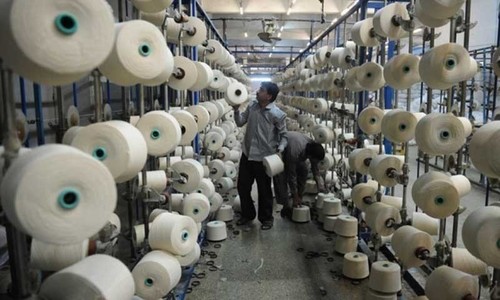
The jute industry was developed in the early 1970’s but its demand fell over the years due to the growing use of plastic packaging. There are only five or six mills currently in operation, which are catering to meagre domestic demand and exports to few countries.
Bangladesh and India are the world’s two leading major jute growing states.
The government has suspended trade relations with India. Therefore, the preferred destination for import of zero-duty jute is Bangladesh, which will enhance the bilateral relations between the two countries. Islamabad is already importing jute from Dhaka at a reduced rate under free-trade agreement.
Prime Minister Imran Khan has also spoken to his Bangladeshi counterpart Sheikh Hasina and it is believed that the telephonic talks will also revive stalled discussions at the bilateral and regional level.
Ms Hasina’s government is trying to seek market access for Bangladeshi products, especially garments and jute-based ones. The government’s removal of additional customs duty on raw jute will encourage further imports from Dhaka.
In budget 2020-21, the government has removed the additional customs duty on jute import. The removal of tax has made local manufacture more cost-competitive, and at present, the productions are fully booked till October, according to an official announcement of the commerce ministry.
Commerce Adviser Abdul Razak Dawood said exports have doubled in one year with growing and first-time sales to markets such as Italy, Switzerland, Greece, Turkey, Australia, New Zealand Iraq and Malaysia. “We ended last year with exports constituting 25 per cent of turnover,” he said.
These facts were shared in an internal strategy meeting held to review the impact of the government’s recent decision on the promotion of exports of non-traditional products.
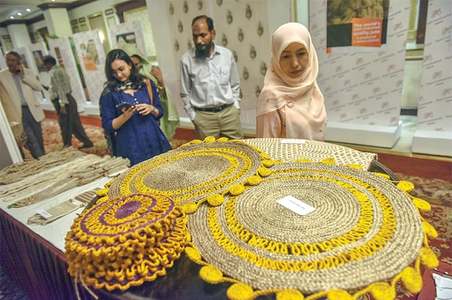
The meeting was informed that as a result of measures, more orders are being received from the international market, and Pakistan is looking at an unprecedented rise in the growth of jute manufacturing industry. It was further said that export of jute products went up by 148pc in terms of weight, fetching more than double foreign exchange in 2019-20, as compared to 2018-19.
Jute products exports stood at $6.83 million in value in 2019-20, compared to $3.23m in the previous year. Major destinations are Sudan, followed by Egypt, Turkmenistan, Italy, Turkey, Australia, Switzerland, Jordan, Malaysia, New Zealand, USA, Greece, and Belgium.
Talking about the diversification of products, Razak said the Ministry of Commerce has a firm belief that reducing duties on raw materials decreases the anti-export bias and enhances proceeds. He added that the shipping of jute products from Pakistan is an excellent example that we can still compete, through the importation of raw jute, with countries like India and Bangladesh, who produce the crop in abundance.
Underlining the principles of diversification, the adviser stated that export of jute products is a critical element of our diversification policy, by emphasising non-traditional areas. He further noted that geographical diversification policies are also showing signs of success as our jute products have found new global markets.
Published in Dawn, July 23rd, 2020